Summary of the Advantages of a WFPB Diet
The credibility and rigour of the information has been validated by Professor Stewart Truswell, an esteemed professor of Nutrition at University of Sydney.
Each morning when I sign into my PC, I check the ABC (Australian Broadcasting Corporation) news, health and science bulletins.
The top news stories have frequent references to the problems that women have with their health (including endometriosis), the difficulty that they have in obtaining diagnosis and treatment and the suffering that they are enduring.
On 22nd May 2025, there was a news item on the [Australian] ABC website showing Amber Bryant running 500 kilometres to raise money for endometriosis research. 1
Another story concerned Kris Stanley who suffers from Premenstrual Dysphoric Disorder [PMDD]. The article was published on Sunday 11 May 2025. 2
I have contacted Amber, Kris and Endometriosis Australia several times through emails and printed letters but did not receive a response despite the fact the the messages were acknowledged as being received. Multiple references from peer-reviewed journal articles are provided. These date back to 1982 – but the situation is getting worse instead of better. 3 ~ 4 ~ 5 ~ 6 ~ 7 ~ 8 ~ 9 ~ 10 ~ 11 ~ 12 ~ 13
Katherine Lawrence story of her recovery from endometriosis in less than 2 months by consuming ONLY a healthy, whole-food, plant-based diet with no added oils or salt (really important). Check out the green VIDEOS button that is on the right panel on every page of my 150 page website.
This did NOT require the purchase of supplementary products.
Premenstrual Dysphoric Disorder (PMDD)
Similarly, the cause of PMDD is also known.
The first paper listed is dated 1989 so it is not that this information is NOT known – but nothing has been done to address the fundamental cause. That is, the high level of estrogens and how this can be alleviated by the changing the food that is consumed. 15 ~ 16 ~ 17
These studies, the first from 1990, show a significant statistical and medical difference in serum estradiol in as little as 2-3 weeks. 18 ~ 19 ~ 20 ~ 21
The Australian Medical Association, the Medical Journal of Australia and Australian Health Practitioner Regulation Agency [AHPRA] have indicated that it is not within their scope to bring this information to the attention of medical doctors or the Australian public.
I have presented this material to state and federal members of parliament, Jenny Aitchison, Meryl Swanson, Tanya Plibersek and Dan Repacholi but no action has resulted.
Endometriosis
It is estimated that in Australia 11%-16% of women in the relevant target population are afflicted by endometriosis.
WHO states the endometriosis is incurable and the cause is unknown. Using references from peer-reviewed medical journals and case studies, I can show that this is not true. It is caused by an over-abundance of oestrogen, in particular estradiol which is the result of a high-fat, high-protein diet as advocated by low-carbohydrate and ketogenic diet advocates such as Dr James Muecke, the 2020 Australian of the Year.
Why then did Katherine Lawerence and hundreds of other women that she has counselled through her work at PETA achieve their results of a complete reversal of their condidition?
I have written to the ABC on several occasions, with references to peer-reviewed articles. Despite the fact that all complaints to the ABC must be responded to, I have not received one response. It could be a life-changing event for 100000s of men and women if the ABC followed one or two of these women over a period of 2 months following the introduction of a healthy whole-food, plant-based diet.
Ketogenic and low-carbohydrate diet advocates such as Dr. James Muecke, Gary Taubes and Nina Teicholz have a much greater impact on diet in our community than whole-food, plant-based advocates. Their book sales are higher, website visits are much more frequent.
Over the past several decades, our health indicators have become progressively worse. The prevalence of many cancers have continued to rise. The mortality rate for all cases of cancer has risen for females. It has decreased for males because of the reduction in lung cancer. 22
Breast cancer, a sex-hormone related cancer with a high prevalence rate, continues to rise.
Pancreatic cancer, has a lower prevalence rate but has a high mortality rate, continues to rise unabated.
Whilst a substantial reduction in cervical cancer occurred between 1992-2002, there has been no reduction in the following two decades.
There are a number of news reports (May 2026) throughout Australia regarding access to dialysis machines with NW Western Australia being the worst affected.
The following review examined studies that used the term ‘vegetarian’ to include all forms of vegetarian diets, from lacto-ovo-vegetarian to strict vegan. Most studies do not include strict vegans because there are insufficient numbers to reach significant conclusions regarding vegan only participants. 23
First, to date, there seems to be a lack of reports on the prevalence of renal disease in the vegetarian population, whereas numerous studies have shown a decrease in the risk of hypertension, type 2 diabetes and metabolic syndrome (MetS), which are the main causes of Chronic Kidney Disease in Western countries, in vegetarian populations.
The following journal article shows what can be achieved in a short period of time (4.5 months!) with a very ill man with stage 3 chronic kidney disease. 24
His estimated glomerular filtration rate (eGFR) increased from 45 to 74 mL/min after 4.5 months on the diet and his microalbumin/creatinine ratio decreased from 414.3 to 26.8 mg/g. His phosphorus level returned to the normal range.
In 2018, 36% of Australians aged 18 and over are overweight (BMI of 25 to up to 30) and 31% of the population are obese (BMI 30 or more). 25
34% of adult Australians have hypertension (greater than 140/90 or taking medication). According to the Framingham Risk Assessment calculator, a systolic value of less than 120 mmHg is ideal. 26
Autoimmune diseases are a pernicious group of diseases where the immune system produces antibodies that destroy the body’s cells. There are 80-100 autoimmune diseases that have been identified.
Autoimmune diseases cumulatively affect 5-10% of the industrial world population and are a significant cause of morbidity and mortality. 27
World-wide, the incidence of autoimmune diseases is increasing at the rate of 19% each and every year. 28
5.3% of Australian adults aged 18 and over had type 2 diabetes in 2017–18. Diabetes is the fastest growing chronic condition in Australia, increasing at a faster rate than other chronic diseases such as heart disease and cancer. 29
Almost 1.9 million Australians have diabetes. On average, one in three of these people have some level of diabetic retinopathy. 30
Dementia is a syndrome in which there is deterioration in memory, thinking, behaviour and the ability to perform everyday activities. It is not a normal part of aging. 50 million people world-wide have dementia with nearly 10 million new cases every year. Alzheimer’s disease is the most common form of dementia contributing 60–70% of cases. 31
In 2016, the global number of individuals who lived with dementia was 43·8 million which increased from 20.2 million in 1990. This represented an increase of 117% in 16 years. Dementia was the fifth leading cause of death globally accounting for 2·4 million deaths. This could be attributed to modifiable risk factors of high BMI, high fasting plasma glucose, smoking, and a high intake of sugar-sweetened beverages. 32
In the US, in 2010, the rate of autism at age 8 was 14.7 per 1,000 which is 1 in 68. Boys are 4.5 times more likely to be affected than girls. 33
This rate continues to increase. As at 2020, about 1 in 36 children has been identified with autism spectrum disorder (ASD) according to estimates from CDC’s Autism and Developmental Disabilities Monitoring (ADDM) Network. About 1 in 6 (17%) children aged 3–17 years were diagnosed with a developmental disability. 34
Dr James Muecke, the Australian of the Year in 2020, presented a talk at the National Press Club in Canberra, Australia on Tuesday, 1 December 2020.
Muecke believes that we should be eating more eggs, cheese, meat and dark chocolate to minimise diabetes, its associated blindness (diabetic retinopathy) and diabetic neuropathy. Peripheral diabetic neuropathy is nerve damage of the limbs that is caused by diabetes. 50% of adults with type 2 diabetes have peripheral neuropathy. It can result in pain, numbness and an increase in sensitivity. Diabetes account for more than 80% of amputations.
I contacted Dr Muecke and asked if he had a transcript of his talk and a list of references for his views. He stated that he gives “a couple hundred presentations a year” with a total audience of 100,000s. The talks are all “of the cuff and are different each time”. The only references he has are contained in his talks. He is having a big negative impact on the health of Australians. People want to be told to eat more red meat, cheese, eggs and chocolate. The number of people who identify themselves as vegan has reduced from 1% to 0.5% over the past couple decades.
My goal is to ensure that people such as Dr Muecke, Gary Taubes, Nina Teicholz, Maryanne Demasi and Robert Lustig are held accountable for their mischief.
My goal is to have the opportunity to address the National Press Club to counter the views that Dr Muecke previously presented.
You can view Dr Muecke’s views by clicking on his image that is on the Home Page of my website.
I have been involved in the teaching, design and compliance of Nutrition diploma and certificate courses for Registered Training Organisations. I have also published a text book. Low-carbohydrate Mania: The Fantasies, Delusions and Myths, to be used in association with the courses to dispel the myths of the validity of low-carbohydrate and ketogenic diets.
You can find my website by performing a Google search on “richard harding nutrition“.
My home page has links to some amazing stories showing the impact that diet on our health. No supplements or purchases are required.Dr. Fiona Godlee was the editor The BMJ from 2005 to 2021. She was an enthusiastic supporter of Nina Teicholz and her low-carbohydrate, high-fat and high animal-sourced diet as was Dr. Richard Smith. Smith’s BMJ Editorial – “Are Some Diets “Mass Murder?” was published on 15 December 2014. Dr. Smith joined The BMJ in 1979 and was editor-in-chief from 1991-2004.
Smith claims that “the forensic demolition of the hypothesis that saturated fat is the cause of cardiovascular disease is impressive”.
It is really extraordinary that Dr. Smith relies on unsubstantiated material from a popular ketogenic diet advocate (one who receives funding from the North American Meat Institute), to advance his views.
From the conclusion of The Big Fat Surprise, the overweight Teicholz proclaims:
Moreover, we now know that there are many good reasons to eat animal foods like red meat, cheese, eggs, and whole milk: they are particularly dense in nutrients— far more so than fruits and vegetables.
And after all, red meat, cheese, and cream are delicious! Not to mention eggs fried in butter, cream sauces, and the drippings from a pan of roasted meats.
Dr. Godlee was the editor on 24th September 2015, when The BMJ issued a press release titled “BMJ investigation questions expert advice underpinning new US dietary guidelines“.
I sent an email to The BMJ and they confirmed on 29 June 2017 that the BMJ Investigation was really a full funded article written by Nina Teicholz. It was NOT a BMJ investigation.Much publicity is given to the longevity of the people of Japan and Okinawa (an archipelago that stretches from southern Japan to Taiwan). However, it is vegetarian Californian Seventh-day Adventists that have the longest lifespan and the highest levels of health on the planet.
The AHS-1 [Adventist Health Study 1] study showed that the average 30-year-old white vegan Californian Adventist male lives 9.5 years longer than the average 30-year-old white omnivore Californian Adventist male and with females living 6.1 years longer. Note that Adventists are much healthier than the average American. 35
Professor Stewart Truswell and his colleague, Professor Jim Mann from were, in their words, “incensed” when Arne Astrup’s article WHO draft guidelines on dietary saturated and trans fatty acids: time for a new approach? was published in the BMJ in July 2019 and received so much attention in the popular press. 36
Stewart was awarded the Order of Australia (AO) in 2001 for “service to public health through nutrition research, education and the development of public policies”.
Professor Truswell’s colleague Professor Jim Mann, from University of Otago was at a World Health Organisation diabetic conference in Europe and the meeting decided not to engage in a public debate because it will “give them oxygen” and that “they will always lose out to the well-funded dairy and beef industries”.
Stewart is “appalled” with Lustig’s and John Yudkin’s influence in the popular press. Stewart was Yudkin’s successor as Head of Department of Nutrition at Queen Elizabeth College, London University.
I disagreed. I have produced an 85 page A5 document that reviews Astrup’s paper which Stewart has reviewed. I also produced a 97 minute video with some of the highlights.
My book and the accompanying video documents how food industry has manipulated the media and researchers to ensure that profits become before public health.
Stewart was a contributor to Dietary Goals for the United States: Second Edition of November 1977 (The McGovern Report). 37
Stewart was a hospital doctor in Cape Town in the 1960s and instigated dietary and nutritional studies of the Dobe !Kung populations of northwest Botswana. He is familiar with their complex click language dialect spoken by the San people of the Kalahari Desert.
Featured Posts
Why Consume a WFPB Diet?
Brief Overview of WFPB Diets
Introduction
Breast, Endometrium and Ovarian Cancers
A Guide to Optimal Well-being
Taiwan, Buddhists and Moderation
What If It’s All Been a Big Fat Lie?
Last updated on Monday 24 August 2026 at 16:31 by administrators
Post Type: postFootnotes
- Ormonde, B. (2025, April 22). Amber Bryant runs 500km from Adelaide to Broken Hill for endometriosis—ABC News. Amber Bryant Runs 500km from Adelaide to Broken Hill for Endometriosis. https://www.abc.net.au/news/2025-04-22/amber-bryant-endometriosis-runner-broken-hill-adelaide/105197158
- Burmas, G. (2025, May 11). Why the diagnosis of premenstrual dysphoric disorder comes better late than never—ABC News. Why the Diagnosis of Premenstrual Dysphoric Disorder Comes Better Late than Never. https://www.abc.net.au/news/2025-05-11/premenstrual-dysphoric-disorder-diagnoses-on-the-rise/105274892
- Campbell, T. C. & Campbell, T. M. (2016) The China Study. Revised and Expanded Edition. Dallas, Texas: BenBella Books.
- Henderson, B. E. et al. (1982) Endogenous Hormones as a Major Factor in Human Cancer. Hormones and Cancer. 42 (8), 3232-3236.
- Persson, I. (2000) Estrogens in the causation of breast, endometrial and ovarian cancers — evidence and hypotheses from epidemiological findings. The Journal of Steroid Biochemistry and Molecular Biology. 74 (5), 357–364.
- The Endogenous Hormones and Breast Cancer Collaborative Group (2002) Endogenous Sex Hormones and Breast Cancer in Postmenopausal Women: Reanalysis of Nine Prospective Studies. Journal of the National Cancer Institute. 94 (8), 606–616.
- Ganmaa, D. & Sato, A. (2005) The possible role of female sex hormones in milk from pregnant cows in the development of breast, ovarian and corpus uteri cancers. Medical Hypotheses. 65 (6), 1028–1037.
- Berrino, F. et al. (2001) Reducing Bioavailable Sex Hormones through a Comprehensive Change in Diet: the Diet and Androgens (DIANA) Randomized Trial. Cancer Epidemiology, Biomarkers & Prevention. 10 (1), 10.
- Bulun, S. E., Gurates, B., Fang, Z., Tamura, M., Sebastian, S., Zhou, J., Amin, S., & Yang, S. (2002). Mechanisms of excessive estrogen formation in endometriosis. Journal of Reproductive Immunology, 55(1–2), 21–33.
- Gurates, B., & Bulun, S. E. (2003). Endometriosis: The ultimate hormonal disease. 21(02), 125–134.
- Bulun, S. E., Yilmaz, B. D., Sison, C., Miyazaki, K., Bernardi, L., Liu, S., Kohlmeier, A., Yin, P., Milad, M., & Wei, J. (2019). Endometriosis. Endocrine Reviews, 40(4), 1048–1079.
- Das, P. K. et al. (2023) Implications of estrogen and its receptors in colorectal carcinoma. Cancer Medicine 12 (1) p.4367–4379.
- Ganmaa, D. & Sato, A. (2005) The possible role of female sex hormones in milk from pregnant cows in the development of breast, ovarian and corpus uteri cancers. Medical Hypotheses. 65 (6), 1028–1037.
- Office on Women’s Health (2025) Premenstrual dysphoric disorder (PMDD) [online]. Available from: https://womenshealth.gov/menstrual-cycle/premenstrual-syndrome/premenstrual-dysphoric-disorder-pmdd.
- Hammarback, S. et al. (1989) Relationship Between Symptom Severity and Hormone Changes in Women With Premenstrual Syndrome. The Journal of Clinical Endocrinology & Metabolism. [Online] 68 (1), 125–130.
- Thys-Jacobs, S. et al. (2008) Differences in Free Estradiol and Sex Hormone-Binding Globulin in Women with and without Premenstrual Dysphoric Disorder. The Journal of Clinical Endocrinology & Metabolism. [Online] 93 (1), 96–102.
- Yen, J.-Y. et al. (2019) Early-and late-luteal-phase estrogen and progesterone levels of women with premenstrual dysphoric disorder. International Journal of Environmental Research and Public Health. 16 (22), 4352.
- Prentice, R. et al. (1990) Dietary fat reduction and plasma estradiol concentration in healthy postmenopausal women. Journal of the National Cancer Institute. 82 (2), 129–134.
- Heber, D. et al. (1991) Reduction of serum estradiol in postmenopausal women given free access to low-fat high-carbohydrate diet. Nutrition (Burbank, Los Angeles County, Calif.). 7 (2), 137–139.
- Bagga, D. et al. (1995) Effects of a very low fat, high fiber diet on serum hormones and menstrual function implications for breast cancer prevention. Cancer. 76 (12), 2491–2496.
- Berrino, F. et al. (2001) Reducing Bioavailable Sex Hormones through a Comprehensive Change in Diet: the Diet and Androgens (DIANA) Randomized Trial. Cancer Epidemiology, Biomarkers & Prevention. 10 (1), 10.
- Anon (n.d.) Cancer data in Australia, Data – Australian Institute of Health and Welfare [online]. (Accessed 22 May 2021).
- Chauveau, P. et al. (2019) Vegetarian diets and chronic kidney disease. Nephrology Dialysis Transplantation. 34 (2), 199–207.]
- Campbell, T. M. & Liebman, S. E. (2019) Plant-based dietary approach to stage 3 chronic kidney disease with hyperphosphataemia. BMJ Case Reports CP. 12 (12), e232080.
- Australian Bureau of Statistics. (2018, December 12). Overweight and obesity, 2017-18 financial year | Australian Bureau of Statistics.
- Australian Institute of Health and Welfare. (2019, July 19). High blood pressure, High blood pressure—Australian Institute of Health and Welfare. https://www.aihw.gov.au/reports/risk-factors/high-blood-pressure/contents/high-blood-pressure
- Shapira, Y. et al. (2010) Defining and analyzing geoepidemiology and human autoimmunity. Journal of Autoimmunity. 34 (3), J168–J177.
- Lerner, A. et al. (2016) The World Incidence and Prevalence of Autoimmune Diseases is Increasing. International Journal of Celiac Disease. 3 (4), 151–155.
- Australian Institute of Health and Welfare. (2020, July 15). Diabetes, Type 2 diabetes—Australian Institute of Health and Welfare.
- Centre for Eye Research Australia. (2024). Diabetic eye disease.
- World Health Organization Fact Sheets (2020) Dementia.
- Nichols, E. et al. (2019) Global, regional, and national burden of Alzheimer’s disease and other dementias, 1990–2016: a systematic analysis for the Global Burden of Disease Study 2016. The Lancet Neurology. 18 (1), 88–106.
- Centers for Disease Control and Prevention (2014) Prevalence of autism spectrum disorder among children aged 8 years-autism and developmental disabilities monitoring network, 11 sites, United States, 2010. Morbidity and mortality weekly report. Surveillance summaries (Washington, DC: 2002). 63 (2), 1-24.
- Centers for Disease Control and Prevention. (2024). Data and Statistics on Autism Spectrum Disorder.
- Fraser, G. E. & Shavlik, D. J. (2001) Ten Years of Life – Is It a Matter of Choice? Archives of Internal Medicine. 161 (13), 1645–1652.
- Astrup, A., Bertram, H. C., Bonjour, J.-P., de Groot, L. C., de Oliveira Otto, M. C., Feeney, E. L., Garg, M. L., Givens, I., Kok, F. J., Krauss, R. M., Lamarche, B., Lecerf, J.-M., Legrand, P., McKinley, M., Micha, R., Michalski, M.-C., Mozaffarian, D., & Soedamah-Muthu, S. S. (2019). WHO draft guidelines on dietary saturated and trans fatty acids: Time for a new approach? BMJ, 366(14137), 1–6.
- Select Committee of Nutrition and Human Needs United States Senate (1977) Dietary Goals for the United States: Second Edition.
However, the study has been funded by the dairy and beef industries.
Discover how industry-funded research is deceiving the public.

 Carbohydrates DO NOT cause diabetes
Truth and Belief
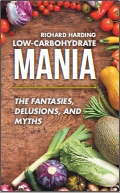
 Discover why researchers, popular commentators and the food industry is more concerned with maintaining corporate profits than ensuring that we have valid health information.
Who is going to get wealthy by encouraging people to eat their fruit and vegetables?
Featured Posts
Why Consume a WFPB Diet?Brief Overview of WFPB Diets
Introduction
Introduction to Sex-hormonal Related Cancers and Endometriosis
Where do You Get Your Protein?
The Problem with Cow's Milk
Breast, Endometrium and Ovarian Cancers
Eating Red Meat is Not Natural
Taiwan, Buddhists and Moderation
Autoimmune Diseases, Biomimicry and Type 1 Diabetes
Glucose Tolerance
7th-day Adventists and Health
Worried about eating eggs?
How Cooking Changed Us
Deception from The BMJ
Endometriosis is Curable
Changes to our Health Indicators
Cause of Type 2 Diabetes
DNA, Genetics and Epigenetics
The Myth of Good and Bad Cholesterol
The Traditional Diet of Inuit
Wheat and the Distorted Views of William Davis