Tag: low carb diets


  • Dan Repacholi and Health Advocate

    Ketogenic and low-carbohydrate diet advocates have been having a much greater impact on our diet and our health in the recent decades.. Book sales are higher, website visits are much more frequent.

    Our health indicators have become progressively worse. The prevalence of many cancers have continued to rise. The mortality rate for all cases of cancer has risen for females. It has decreased for males because of the reduction in lung cancer.

    Breast cancer, a sex-hormone related cancer with a high prevalence rate, continues to rise.

    Pancreatic cancer, has a lower prevalence rate but has a high mortality rate, continues to rise unabated.

    Whilst a substantial reduction in cervical cancer occurred between 1992-2002, there has been no reduction in the following two decades.

    n 2018, 36% of Australians aged 18 and over are overweight (BMI of 25 to up to 30) and 31% of the population are obese (BMI 30 or more).

    34% of adult Australians have hypertension (greater than 140/90 or taking medication). According to the Framingham Risk Assessment calculator, a systolic value of less than 120 mmHg is ideal.

    Autoimmune diseases are a pernicious group of diseases where the immune system produces antibodies that destroy the body’s cells. There are 80-100 autoimmune diseases that have been identified.

    Autoimmune diseases cumulatively affect 5-10% of the industrial world population and are a significant cause of morbidity and mortality.

    World-wide, the incidence of autoimmune diseases is increasing at the rate of 19% each and every year.

    5.3% of Australian adults aged 18 and over had type 2 diabetes in 2017–18. Diabetes is the fastest growing chronic condition in Australia, increasing at a faster rate than other chronic diseases such as heart disease and cancer.

    Almost 1.9 million Australians have diabetes. On average, one in three of these people have some level of diabetic retinopathy.

    Dementia is a syndrome in which there is deterioration in memory, thinking, behaviour and the ability to perform everyday activities. It is not a normal part of aging. 50 million people world-wide have dementia with nearly 10 million new cases every year. Alzheimer’s disease is the most common form of dementia contributing 60–70% of cases.

    In 2016, the global number of individuals who lived with dementia was 43·8 million which increased from 20.2 million in 1990. This represented an increase of 117% in 16 years. Dementia was the fifth leading cause of death globally accounting for 2·4 million deaths. This could be attributed to modifiable risk factors of high BMI, high fasting plasma glucose, smoking, and a high intake of sugar-sweetened beverages.

    In the US, in 2010, the rate of autism at age 8 was 14.7 per 1,000 which is 1 in 68. Boys are 4.5 times more likely to be affected than girls.

    This rate continues to increase. As at 2020, about 1 in 36 children has been identified with autism spectrum disorder (ASD) according to estimates from CDC’s Autism and Developmental Disabilities Monitoring (ADDM) Network. About 1 in 6 (17%) children aged 3–17 years were diagnosed with a developmental disability.


    That is the bad news. The good news is much of these illnesses can be prevented and even reversed with the consumption of a whole-food, plant-based diet with NO added oils (or salt). Coconut oil, olive oil or mayonnaise are not healthy and are most assuredly NOT associated with a natural diet of humans (or chimpanzees, bonobos, gorillas and orangutans).


    Read more ⇒

  • Impact of Corporate Funding

    Given our distrust of authorities, we want to hear that we have been deceived by the medical establishment into believing that their advice on fats and saturated fats is based on myths.

    The Dietary Guidelines for Americans are revised jointly by the US Department of Agriculture (USDA) and the Department of Health and Human Services every 5 years. Originally, the USDA was responsible. The US Department of Agriculture represents the interests of the agricultural industry.

    In 2002, dietary guidelines report emphasised that total dietary protein as high as 35% of total diet calories would “minimise risk for those chronic diseases”. This was not based on scientific evidence.

    A lawsuit forced the committee to reveal that the majority of its members at the time had an association with the dairy industry.

    Read more ⇒

  • Endometriosis is Curable Without Supplements

    The WHO states the endometriosis is incurable and the cause is unknown. Using references from peer-reviewed medical journals and case studies, I can show that this is not true.

    It is caused by an overabundance of oestrogen, in particular oestradiol which is the result of a high-fat, high-protein diet as advocated by low-carbohydrate and ketogenic diet advocates such as Dr James Muecke, the 2020 Australian of the Year. Many references are provided from my website.

    Read more ⇒

  • What does a low-carb expert look like now?

    Find out the views of some popular high-fat, low-carbohydrate commentators. See how well their advice is working for them.

    Read more ⇒

  • The Cause of Type 2 Diabetes

    The cause of type 2 diabetes has been known since at least the 1920s.

    In 1923, Dr. P.J. Cammidge wrote "that one of the commonest causes of a seeming progressive failure of carbohydrate tolerance was a conscious or unconscious increase in the fat of the diet."

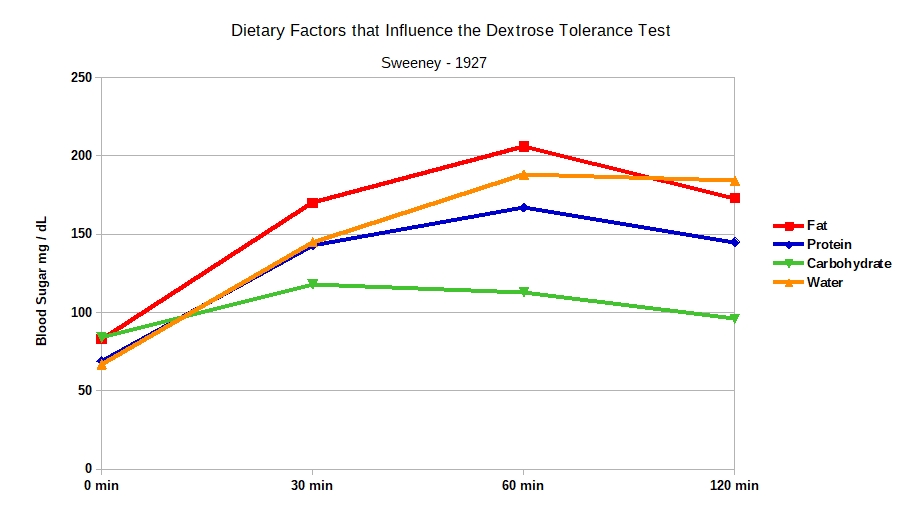
    J.S. Sweeney wrote two papers in 1927 and 1928 that showed high-fat and high-protein diets increase insulin resistance.

    Sir Harold Himsworth (1905–93) was a renown medical doctor and researcher. He was appointed Professor of Medicine at the University of London in 1939. He is best known for his work on diabetes although he had many other interests including the effects of radiation, tropical medicine and epidemiology.

    Himsworth presented a paper in 1935,

    "Showing the different diets eaten by different races, nations and social classes throughout the world and a close correlation has been demonstrated between dietary preference and the incidence of diabetes mellitus. [...] A high proportion of carbohydrate and low proportion of fat were found in all cases to be associated with low diabetic incidence, whilst a low proportion of carbohydrate and a high proportion of fat were associated with a high incidence."

    Read more ⇨

  • South Australia Department of Health – Dr James Muecke Communication

    A letter was sent to the South Australian Department of Health on the 11th January 2021 after they declined to investigate the claims of Dr James Muecke, the Australian of the Year in 2020.

    He is trying to convince Australians to eat more meat, eggs and dairy to prevent diabetes, diabetic retinopathy and neuropathy.

    Australia is ranked number 2 in meat consumption, just behind United States but in front of Argentina, Uruguay, Brazil and New Zealand.

    The response stated that they can only address specific cases. The unsubstantiated claims of Muecke can continue to be disseminated to the detriment of our health.

    Read more ⇨

  • Dr James Muecke Australian of the Year in 2020

    Dr James Muecke is the Australian of the Year in 2020 which was awarded for his work as an eye- surgeon and his work in preventing blindness.

    He is trying to convince Australians to eat more meat, eggs and dairy. Australia is ranked number 2 in meat consumption, just behind United States but in front of Argentina, Uruguay, Brazil and New Zealand.

    Muecke has declared that we need to “Declare war on type 2 diabetes and cut back on sugar” in order to reduce the incidence of blindness.

    He believes that it is the introduction of sugary drinks and highly processed foods are the cause of diabetes – not a high-fat, high-protein diet as shown by numerous papers dating back to 1927.

    Read more ⇨

  • Wheat and the Distorted Views of William Davis

    William Davis, a cardiologist, author of Wheat Belly, claims that “modern wheat is a perfect chronic poison”. He claims that modern wheat causes diabetes, inflammation, heart disease and high blood pressure and that eliminating wheat will cure these problems.

    Davis recommends the avoidance of foods such as corn, rice, quinoa, millet, buckwheat, beans and potatoes, even though they do not contain wheat or gluten.

    Davis's inconsistencies would be amusing if they did not have such serious health consequences.

    Read more ⇒

  • Eggs are Not OK

    Australians’ usual egg consumption is a document prepared by researchers at the CSIRO. The CSIRO is the premier Australian government-funded research organisation.

    The conclusion of this document states:

    Eggs provide a low cost, convenient source of protein and other key nutrients. Our results [from the Healthy Diet Score survey] suggest their inclusion in the diet is associated with a higher diet quality, in particular higher consumption vegetables and lower consumption of discretionary foods.

    This document is a marketing document. It needs a lot of imagination to make such a conclusion from the CSIRO’s published research papers. This conclusion also contradicts a number of other studies that show consuming eggs is detrimental.

    I sent an email on 28th October 2017 to the lead author of this document, Dr Gilly Hendrie. Hendrie is also the lead author of a number of journal articles relating to the Healthy Diet Index. A copy of this email can be found at CSIRO Healthy Diet Score and Egg Consumption in Australia.

    The response will be published when it is received.

    Read more ➱

  • CSIRO Healthy Diet Score and Egg Consumption in Australia

    In May 2015, the CSIRO (Australia) Healthy Diet Score survey was launched. This survey describes Australian’s self-reported diets and their compliance with the Australian Dietary Guidelines. As at June 2016, more than 85,000 people have responded.

    This survey was used to justify the “Eggs are OK every day” campaign. This is despite the fact that the only measurable health outcome was weight status and despite the fact that there is only a fair correlation between two different self-reported dietary surveys that were performed a week apart.

    Read more ➱


Search


WHO's recommendations on saturated fat are out of date, expert team says.
However, the study has been funded by the dairy and beef industries.
Discover how industry-funded research is deceiving the public.


Low-carboydrate Diets - The Myths Why are Eggs NOT OK? Dairy and Wheat - What you did not know Carbohydrates DO NOT cause diabetes
Truth and Belief

Low-carbohydrate Mania: The Fantasies, Delusions, and Myths

Center for Nutrition Studies

Center for Nutrition Studies