Tag: wise nutrition coaching
-
Summary of the Advantages of a WFPB Diet
To eat fully consciously connects us to the miracle of all life.
The WHO states the endometriosis is incurable and the cause is unknown. Using references from peer-reviewed medical journals and case studies, I can show that this is not true.
It is caused by an overabundance of oestrogen, in particular estradiol which is the result of a high-fat, high-protein diet as advocated by low-carbohydrate and ketogenic diet advocates such as Dr James Muecke, the 2020 Australian of the Year. Many references are provided on my website.
I have a 150 page, 120000 word website explaining how informed choices relating to the food we consume can result in optimal outcomes for our health, the environment and for the animals that we share the earth.
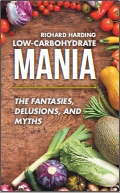
When I published my book Low-Carbohydrate Mania: Fantasies, Illusions, and Myths, I posted Dr John McDougall a copy to his practice in Santa Rosa, California. We communicated by email for nearly a year. Mostly the correspondence was concerned with the views of William Davis and Robert Lustig. He viewed both with some – let’s say, bewilderment.
Whole-food, plant-based diets without added oils or simple carbohydrates are best for our health, the environment and the animals we share the earth with.
Read more ⇒ -
Why Consume a Whole-food, Plant-based Diet
To eat fully consciously connects us to the miracle of all life.
The WHO states the endometriosis is incurable and the cause is unknown. Using references from peer-reviewed medical journals and case studies, I can show that this is not true.
It is caused by an overabundance of oestrogen, in particular estradiol which is the result of a high-fat, high-protein diet as advocated by low-carbohydrate and ketogenic diet advocates such as Dr James Muecke, the 2020 Australian of the Year. Many references are provided on my website.
I have a 150 page, 120000 word website explaining how informed choices relating to the food we consume can result in optimal outcomes for our health, the environment and for the animals that we share the earth.
When I published my book Low-Carbohydrate Mania: Fantasies, Illusions, and Myths, I posted Dr John McDougall a copy to his practice in Santa Rosa, California. We communicated by email for nearly a year. Mostly the correspondence was concerned with the views of William Davis and Robert Lustig. He viewed both with some – let’s say, bewilderment.
Whole-food, plant-based diets without added oils or simple carbohydrates are best for our health, the environment and the animals we share the earth with.
Read more ⇒ -
About Business Rules
Business rules determine how insurance companies calculate premiums, how banks assess risk and process their transactions, how finance companies balance portfolios, how foreign exchange traders trade and how retailers set…
-
In Order to be Truthful – Michael Leunig
In order to be truthful.
We must do more than speak the truth.
We must also hear the truth.
We must also receive the truth.
We must also act on the truth.
We must also search for the truth.
The difficult truth.
Within and around us.
We must devote ourselves to the truth.
Otherwise we are dishonest
And our lives are mistaken.
Go grant us the stength and the courage
To be truthful.
Amen
-
Getting Started Reading List
Below is a list of webpages that demonstrates the validity of a whole-food, plant-based diet (with NO added oils) in mitigating the risk of premature deaths in our society and possibily reversing these diseases.
Our addiction to testosterone and dopamine fuelled behaviour tempts us to live life on the edge without regard for possible long-term consequences to our health, to society, our relationships, the animals that we share the planet and to the environment.
Read more ⇒ -
A Reading List
A very short list of interesting, challenging and remarkable books. Some I could not finish or could only read (or listen to) in short segments.
Read more ⇒ -
A Guide to Optimal Well-being
The great news is that the cause of breast and prostate cancers are already known along with heart disease, type 1 and type 2 diabetes, rheumatoid arthritis and other "diseases of affluence".
Professor Michael Brown, the Nobel prize winner in 1985 stated, “It turns out to be a lot easier to do the science than to change people’s behaviour“. He stated that we do not need any more research, drugs or stem cells and that we can solve the majority of our “diseases of affluence right now“.
I have a poster at my local Organic Store. Several people have approached me and told me that they life has changed remarkably (for the better) after changing their diet as a result of reading my material. Two were really, really angry - wanting to know why their expensive and ineffectual medical specialists were unable to have any impact on their health when they were able to make profound changes in a very short period of time based only on what they ate.
Imagine the impact on our society if this information was readily available. It could be Walkley Award material for a dedicated and inquistive journalist as well as being one of the major achievements of the life of political leaders.
Read more ⇒ -
Over-exploitation of Ocean’s Resources
Of the straddling stocks nearly two-thirds of the stocks (64 per cent) are classified as over-exploited, depleted or recovering, 23 per cent are fully exploited, 12 per cent are moderately exploited.
Straddling stocks are stocks of fish which migrate between the economic exclusive zone of one or more regions and the high seas. These are highly migratory fish stocks.
80% per cent of the world’s fish stocks are reported as fully exploited or over-exploited.
Fishing subsidies greatly distort the fisheries market.
Global fisheries subsidies were estimated to be US$35 billion. The total revenue from the industry is US$90 billion.
Harmful subsidies constituted US$20 billion each year consisting of fuel subsidies, management, port and harbour tax relief and equipment modernisation. So US$20 billion each year are subsidising an industry to catch more fish that are over-exploited.
Read more ⇒ -
Dan Repacholi – Health Advocate
Ketogenic and low-carbohydrate diet advocates have been having a much greater impact on our diet and our health in the recent decades.. Book sales are higher, website visits are much more frequent.
Our health indicators have become progressively worse. The prevalence of many cancers have continued to rise. The mortality rate for all cases of cancer has risen for females. It has decreased for males because of the reduction in lung cancer.
Breast cancer, a sex-hormone related cancer with a high prevalence rate, continues to rise.
Pancreatic cancer, has a lower prevalence rate but has a high mortality rate, continues to rise unabated.
Whilst a substantial reduction in cervical cancer occurred between 1992-2002, there has been no reduction in the following two decades.
In 2018, 36% of Australians aged 18 and over are overweight (BMI of 25 to up to 30) and 31% of the population are obese (BMI 30 or more).
34% of adult Australians have hypertension (greater than 140/90 or taking medication). According to the Framingham Risk Assessment calculator, a systolic value of less than 120 mmHg is ideal.
Autoimmune diseases are a pernicious group of diseases where the immune system produces antibodies that destroy the body’s cells. There are 80-100 autoimmune diseases that have been identified.
Autoimmune diseases cumulatively affect 5-10% of the industrial world population and are a significant cause of morbidity and mortality.
World-wide, the incidence of autoimmune diseases is increasing at the rate of 19% each and every year.
5.3% of Australian adults aged 18 and over had type 2 diabetes in 2017–18. Diabetes is the fastest growing chronic condition in Australia, increasing at a faster rate than other chronic diseases such as heart disease and cancer.
Almost 1.9 million Australians have diabetes. On average, one in three of these people have some level of diabetic retinopathy.
Dementia is a syndrome in which there is deterioration in memory, thinking, behaviour and the ability to perform everyday activities. It is not a normal part of aging. 50 million people world-wide have dementia with nearly 10 million new cases every year. Alzheimer’s disease is the most common form of dementia contributing 60–70% of cases.
In 2016, the global number of individuals who lived with dementia was 43·8 million which increased from 20.2 million in 1990. This represented an increase of 117% in 16 years. Dementia was the fifth leading cause of death globally accounting for 2·4 million deaths. This could be attributed to modifiable risk factors of high BMI, high fasting plasma glucose, smoking, and a high intake of sugar-sweetened beverages.
In the US, in 2010, the rate of autism at age 8 was 14.7 per 1,000 which is 1 in 68. Boys are 4.5 times more likely to be affected than girls.
This rate continues to increase. As at 2020, about 1 in 36 children has been identified with autism spectrum disorder (ASD) according to estimates from CDC’s Autism and Developmental Disabilities Monitoring (ADDM) Network. About 1 in 6 (17%) children aged 3–17 years were diagnosed with a developmental disability.
That is the bad news. The good news is much of these illnesses can be prevented and even reversed with the consumption of a whole-food, plant-based diet with NO added oils (or salt). Coconut oil, olive oil or mayonnaise are not healthy and are most assuredly NOT associated with a natural diet of humans (or chimpanzees, bonobos, gorillas and orangutans).
Read more ⇒ -
Arthur Stewart Truswell – A Short Bibliography
Arthur Stewart Truswell was born in England on 18 August 1928.
Stewart Truswell studied medicine at Liverpool University and Cape Town University graduating with a Bachelor of Medicine, Bachelor of Surgery degree with honours at University of Cape Town in 1952, and Doctor of Medicine at University of Cape Town in 1958 for his thesis 'Researches in Human Nutrition'.
Stewart was conferred a Doctor of Science (DSc) on 15 May 1998 by the University of Sydney.
A Doctor of Science is a research-based doctoral degree which is higher than a PhD, is awarded for significant, original and distinguished contributions to a specific field of science. It signifies the highest level of academic achievement in science and provides recognition to scholars who have made substantial advancements in their field.
During his time at the University of Sydney, Stewart established the Human Nutrition Department and the Department of Biochemistry as one of the two leading Centres of Human Nutrition Research and Education in Australia and made significant contributions to the University of Sydney in research, teaching and administration. He fostered and maintained strong international links and his research received high international recognition. In recognition of his outstanding and sustained service to the university, the senate conferred the title of Emeritus Professor on 1 February 1999.
Stewart was the Foundation Boden Professor of Human Nutrition at the University of Sydney taking up the position in 1978 until retiring from the University on 31 December 1998.
Read more ⇒
Font Resizer
Search
However, the study has been funded by the dairy and beef industries.
Discover how industry-funded research is deceiving the public.

 Carbohydrates DO NOT cause diabetes
Truth and Belief
 Discover why researchers, popular commentators and the food industry is more concerned with maintaining corporate profits than ensuring that we have valid health information.
Who is going to get wealthy by encouraging people to eat their fruit and vegetables?
Featured Posts
Why Consume a WFPB Diet?Brief Overview of WFPB Diets
Introduction
Introduction to Sex-hormonal Related Cancers and Endometriosis
Where do You Get Your Protein?
The Problem with Cow's Milk
Breast, Endometrium and Ovarian Cancers
Eating Red Meat is Not Natural
Taiwan, Buddhists and Moderation
Autoimmune Diseases, Biomimicry and Type 1 Diabetes
Glucose Tolerance
7th-day Adventists and Health
Worried about eating eggs?
How Cooking Changed Us
Deception from The BMJ
Endometriosis is Curable
Changes to our Health Indicators
Cause of Type 2 Diabetes
DNA, Genetics and Epigenetics
The Myth of Good and Bad Cholesterol
The Traditional Diet of Inuit
Wheat and the Distorted Views of William Davis
Center for Nutrition Studies

Last Modified
- Notes Regarding Vaccinations 22 October 2026
- Dementia Rates are Soaring 22 October 2026
- A Reading List 22 October 2026
- Where Do You Get Protein on a Vegan Diet? 21 October 2026
- Animal and Plant Protein - Lysine and Arginine 21 October 2026
- Animal and Plant Protein – Leucine and Telomeres 21 October 2026
- Dan Buettner – Blue Zones 21 October 2026
- Guide to Measuring Blood Pressure 20 October 2026
Contact