Additional Reading
Below is a list of books that explore the benefits of a whole-food, plant-based diet as well as guidance on how to get started – in addition to my book on the right.
Read John Robbins’s incredible story about The Pig Farmer from Iowa that is moving and transforming.
An excellent getting started guide is below. It describes a gentle way of starting by committing to a whole-food, plant-based diet for three weeks. This will give you enough time to start to the health benefits by limiting the amount of changes required. Frequently the changes are so profound that fully embrancing the concept is not as difficult as it first appears.
Vegan Starter Kit
| Cover | Book | Authors | Description |
|---|---|---|---|
 | The China Study Revised Edition | Colin Campbell, Thomas Campbell | The China Study is one of the most important books relating to health and nutrition ever published. Surveys were conducted in China starting in 1983. The study consisted of 6,500 people in 65 counties. They examined over 360 different health, lifestyle, and nutrition factors and found over 8,000 significant correlations. This, as well as other research, led Campbell to believe that the vast majority of our modern day aliments can be prevented and possibly reversed with a whole-food, plant-based diet. |
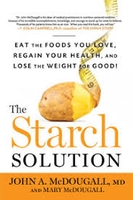 | The Starch Solution | John McDougall | Complex carbohydrates are the foundation of a healthy diet which contradicts many popular commentators as well as many medical practitioners. The book also contains many recipes. |
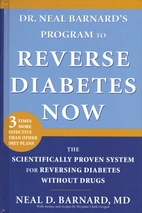 | Dr. Neal Barnard’s Program for Reversing Diabetes | Neal Barnard | Dr. Neal Barnard’s Program for Reversing Diabetes outlines a dietary approach to preventing, controlling and reversing diabetes. The program is based on a series of research studies Dr. Barnard and his colleagues have conducted over the years, the latest funded by the National Institutes of Health. Published in the August 2006 issue of Diabetes Care, that study found Dr. Barnard’s program to be three times more effective than the American Diabetes Association dietary guidelines at controlling blood sugar. |
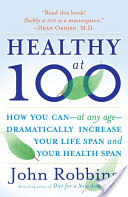 | Healthy at 100 | John Robbins | John Robbins looks at four different cultures to discover the common themes that allow them to be the healthiest people on the planet. |
 | Whole Rethinking the Science of Nutrition | Colin Campbell, Howard Jacobson | After a review of the evidence that shows a whole-food, plant-based diet is the best for our health, Colin Campbell examines the reasons that prevent this from being more widely known. |
 | The China Study Solution | Thomas Campbell | Written by Colin Campbell’s son, who is a medical doctor, it looks at the steps required to incorporate a whole-food, plant-based diet into our lives. Recipes are also included. |
 | Diet for a New America | John Robbins | Diet for a New America was first published in 1987 with a 25th anniversary edition published in 2012. This book examines our dependency upon animal products for our food and the impact it has on our health, the environment and the animals involved. An important important book to awaken our hearts to the impacts of our eating habits on our everyday lives. Read John’s incredible story about The Pig Farmer from Iowa that is moving and transforming. |
 | Catching Fire How cooking made us human | Richard Wrangham | Richard Wrangham is a Professor of Biological Anthropology at Harvard University and a director of the Kibale Chimpanzee Project in Uganda. Wranghams’s view is that cooking food is an essential human activity. Cooking increased the value of our food. It changed our bodies, our brains, our use of time and our social relationships. How Cooking Made Us Human |
 | How to Survive a Pandemic | Michael Greger | The majority of infectious diseases (and all viral diseases) result from our interaction with animals. This is book with thousands of references gives a detailed descriptions of our greatest diseases from bubonic plague, smallpox, the deadly influenza of 1918 and the deadly viral diseases SARS, MERS and COVID-19. Our collective memory of the horror of the 1918 influenza plague appears to be largely forgotten – the scale of it simply too large to comprehend even though it is only a century in the past. We know already what causes these diseases. It is our livestock farming practices, particularly in the US with the refusal of livestock industry to acknowledge their role in propagating these deadly diseases which are transmitted by organisms such as Salmonella, Yersinia, Campylobacter, Listeria and Escherichia coli as well as the viral diseases influenza, SARS, MERS and COVID-19. Poultry causes more deadly disease than all other animals combined with goats, sheep, camels, poultry, bars and fish being the main other source. Most of these disease-causing bacteria are resistant to “one or more antibiotics and more than half of the samples of poultry bacteria are resistant to > 5 drugs!” Many diseases have become resistant to antibiotics because of the routine administration of antibiotics to feedlot animals. Infection with the poultry bacteria Campylobacter contaminates a quarter of chicken meat in the US with Guillain-Barré syndrome being one of the severe and deadly consequences. Instead of feeding livestock plant-based material, livestock is now fed slaughterhouse products containing blood, inedible organs, entrails and feces to save costs. Not only is it fed to other animals, it is also used to feed fish and fertilize plants. The ground-up remains of diseased animals end up in our food and waterways. The agricultural industry is well aware of this link but continues to deny and actively and aggressively fight for their right to continue these insidious practices. Mad cow disease as resulting transmission of prion disease from contaminated sheep and cows in the 1980s Prions—infectious proteins are the cannot be treated with antibiotics and are not destroyed by proper cooking. Hundreds of people have been killed by Creutzfeldt-Jakob disease (vCJD). Creutzfeldt–Jakob disease (subacute spongiform encephalopathy) is brutal and always fatal. Symptoms include memory loss, behavioral changes, poor coordination, visual disturbances, dementia, blindness, weakness, paralysis, coma and death. Approximately 70% of people die within a year of diagnosis. Food safety regulation is much stronger in European countries. The obvious answer is that instead of making livestock food safer, a much better solution is to avoid animal product. |
 | How Not To Die Cookbook | Michael Greger, Gene Stone | A beautifully produced cookbook with many practical and quick whole-food plant-based recipes. A brief introduction describes Michael's journey that led him to become an advocate of a plant-based diet. |
 | LeAnne Campbell | LeAnne Campbell | Another beautifully produced cookbook that has been revised and includes many-easy-to-prepare recipes. LeAnne is the daughter of Colin Campbell and currently lives in the Dominican Republic. She founded Global Roots, to help create sustainable communities through whole foods, plant-based eating. |
 | The Future of Nutrition | Colin Campbell Nelson Disla | Whilst they are in the minority of the general population, there have been advocates for diets devoid of animal products for centuries in populations such as ancient Rome and the Italian Renaissance. Historical Advocates of Plant-based Diets Pythagoras (570 to 495 BCE), Plato (428–423 BCE to 348/347 BCE), Sotion of Alexandria (1st century BCE), Plutach (50 to 120 CE) and Rene Descartes (1596 to 1650) were staunch opponents of killing and consuming animals. There is extensive "modern" research starting with William Lambe and John Abernetly in the first decade of the 1800s that shows a significant increase in cancer rates is a result of: Reports on the effects of a peculiar regimen on scirrhous tumors and cancerous ulcers. Excess in food consumption, particularly meat and other protein products. In 1846, William Hayle Walshe showed that cancer was "primarily a disease of civilization" due to an excess of meat consumption. Frederick Hoffman was born in Germany in 1865. His mother's desperate financial situation required him to leave home at the age of 14. Due to his small stature and mal-nourishment he was unable to obtain physical work. At the age of 19, Hoffman borrowed enough money for passage to New York from an uncle. In Ohio, he was offered a temporary position in a store where he learnt English by delivering groceries. In 1888, Hoffman worked as an industrial insurance agent for Metropolitan Insurance Company. In 1892 Prudential Life Insurance Company hired Hoffman Frederick as a statistician in New Jersey. He concluded that statistical reports were means a achieving social justice. Hoffman campaign for social reforms such as safety and health conditions of industry workers, especially that of miners. He was interested in Navajo society, made an honorary Navajo chief and was interested in the value of Indian herbal remedies and medicines. He campaigned for better health care for minorities, especially American Indians and ensured that American native populations were insurable. He wrote thousands of extensive papers about malaria, tuberculosis, cancer, leprosy, homicide, suicide, national health and social insurance, aviation, geography, American Indians, aesthetics and childbirth. He was awarded an honorary doctorate by Tulane University and was appointed a trustee of the American Cancer Society and chairman of its committee on statistics. Frederick resigned from Prudential in 1922. He continued as a consultant until 1935. Because of his leadership in cancer research, he was awarded the American Cancer Society’s Clement Cleveland Medal in 1943. He also was named a fellow of the Royal Statistical Society of London, made a member of the German Society for Insurance Science, named an associate fellow of the American Medical Association, made an associate member of the American Academy of Medicine, and made an honorary member of the Essex County Anatomical and Pathological Society. He was a member of the American Economic Association, the American Academy of Social and Political Science in the City of New York, the National Institute of Social Sciences, the American Sociological Society, the Southern Sociological Congress, the National Conference on Charities and Corrections and the American Association for the Advancement of Science. He was the seventh president of the American Statistical Association. Hoffman’s 1915 study of cancer mortality rates cites 579 sources and includes a presentation of statistical methodology in its first 221 pages. This study was the basis for the first United States Cancer Census. Frederick Hoffman was the author of a 749 page book Cancer and Diet, written in 1937, demonstrating: That overnutrition is common in the case of cancer patients to a remarkable and exceptional degree, and that overabundant food consumption [of red meat] unquestionably is the underlying cause of the root condition of cancer in modern life. Hoffman published 1300 items including 28 major works of 100 or more pages. The Future of Nutrition examines: ⇒ Why the institutional emphasis on individual nutrients (instead of whole foods) as a means to explain nutrition has had catastrophic consequences, ⇒ How our reverence for "high quality" animal protein has distorted our understanding of cholesterol, saturated fat, unsaturated fat, environmental carcinogens and more, ⇒ Why mainstream food and nutrient recommendations and public policy favor corporate interests over that of personal and planetary health, ⇒ How we can ensure that public nutrition literacy can prevent and treat personal illness more effectively and economically. |
 | Prevent and Reverse Heart Disease | Caldwell Esselstyn | Dr Esselstyn is a US surgeon who has researched the effects of diet and health. He is one of the doctors along with Colin Campbell and Dean Ornish that Bill Clinton has credited with his health transformation. He won an Olympic gold medal in rowing at the 1956 Olympics. He was an army surgeon in Vietnam, a member of the Board of Governors of the Cleveland Clinic, one of the world’s top cardiac centres and was named in 1994-1995 as one of the top doctors in USA. Dr Caldwell Esselstyn The world's advanced countries have easy access to plentiful high fat food; ironically, it is this rich diet that produces atherosclerosis. In the world's poorer nations, many people subsist on a primarily plant-based diet, which is far healthier, especially in terms of heart disease. To treat coronary heart disease, a century of scientific investigation has produced a device-driven, risk factor-oriented strategy. Nevertheless, many patients treated with this approach experience progressive disability and death. This strategy is a rearguard defensive. In contrast, compelling data from nutritional studies, population surveys, and interventional studies supports the effectiveness of a plant-based diet and aggressive lipid-lowering to arrest, prevent, and selectively reverse heart disease. In essence, this is an offensive strategy. The single biggest step toward adopting this strategy would be to have United States dietary guidelines support a plant-based diet. An expert committee purged of industrial and political influence is required to assure that science is the basis for dietary recommendations. A coronary angiogram examines the heart's blood vessels using X-rays. Images of coronary angiograms of the circumflex artery in Dr Esselstyn's books and website shows significant improvement following 32 months on a plant-based diet. The Hagen–Poiseuille equation shows that the flow rate of blood through the artery is proportional to the radius raised to the fourth power, meaning that a small increase in the internal diameter of the artery greatly increases the amount of blood that flows through the artery. Caldwell B. Esselstyn, Jr., M.D. Prevent and Reverse Heart Disease Avery Trade 2008 www.dresselstyn.com/site/Opens in a new window |
Last updated on Thursday 28 May 2026 at 20:30 by administrators
Post Type: post
WHO's recommendations on saturated fat are out of date, expert team says.
However, the study has been funded by the dairy and beef industries.
Discover how industry-funded research is deceiving the public.
However, the study has been funded by the dairy and beef industries.
Discover how industry-funded research is deceiving the public.

 Carbohydrates DO NOT cause diabetes
Truth and Belief
 Discover why researchers, popular commentators and the food industry is more concerned with maintaining corporate profits than ensuring that we have valid health information.
Who is going to get wealthy by encouraging people to eat their fruit and vegetables?
Featured Posts
Why Consume a WFPB Diet?Brief Overview of WFPB Diets
Introduction
Intoduction to Sex-hormonal Related Cancers and Endometriosis
Where do You Get Your Protein?
The Problem with Cow's Milk
Breast, Endometrium and Ovarian Cancers
Eating Red Meat is Not Natural
Taiwan, Buddhists and Moderation
Autoimmune Diseases, Biomimicry and Type 1 Diabetes
Glucose Tolerance
7th-day Adventists and Health
Worried about eating eggs?
How Cooking Changed Us
Deception from The BMJ
Endometriosis is Curable
Changes to our Health Indicators
Cause of Type 2 Diabetes
DNA, Genetics and Epigenetics
The Myth of Good and Bad Cholesterol
The Traditional Diet of Inuit
Wheat and the Distorted Views of William Davis