Tag: whole food plant based diet
-
Taiwanese Buddhist Study
Everything in moderation is a near unanimous response by health professional, health support organisations and media commentators to solving our health crisis.
A Taiwanese Buddhist study with 4,384 participants compared type 2 diabetes outcomes for lacto-ovo-vegetarians compared with those who consumed meat. The meat-eating group ate only a very small amount of meat.
Read more ⇨ -
When Vegan Diets Do Not Work
It is not uncommon for people to claim that they have tried a vegan diet and it simply did not work for them. Not all vegan diets are healthy.
Much publicity is given to the longevity of the people of Japan and Okinawa (an archipelago that stretches from southern Japan to Taiwan). However, the population with the longest lifespan and the highest levels of health on the planet is the vegan Californian Seventh-day Adventists.
People are not predisposed to vegan diets or otherwise. When it comes to nutrition, we are pretty much the same – allergies being one significant difference.
Below are components of a healthy whole-food, plant-based diet. Many people on a unhealthy vegan diet are missing a number of important components of an optimal diet.
Read more ➱ -
Too Much Fruit?
Many popular commentators suggest that we limit fruit intake to two pieces of fruit a day due to the fructose content. However, there is a big difference between consuming fructose in fruit and consuming fructose added to foods in products such as high-fructose corn syrup.
Read more ➱ -
Information About Breast, Endometrium and Ovarian Cancers
There are hundreds, if not thousands, of papers in peer-reviewed medical journals dating back to the mid 1980s relating to the causes and preventative of breast, cervical, ovarian, endometrial and corpus uterine cancers. Unfortunately, this information is generally not read by medical practitioners, specialists or health support organisations.
For example, a 1982 paper (more than 4 decades ago) states that "the concept that hormones can cause human cancer, is most developed for the four hormone-related cancers which are breast, prostate, endometrium, and ovary".
Read more ➱ -
Pink Day Blues
In 1985, National Breast Cancer Awareness Month (October) was created by the American Cancer Society. Funding was provided by Zeneca (later AstraZenca) , a British pharmaceutical company. AstraZenca is still (as at 2018) associated with Breast Cancer Awareness Month. AstraZenca produces Tamoxifen. Tamoxifen is an estrogen antagonist or anti-estrogen drug which works by blocking the effects of estrogen.
Pink Day is one day in October which is designated to create awareness of breast cancer and to raise money for research.
Lifetime exposure to estrogen is 2.5-3 times higher in Western women than rural Chinese women in the 1980s. China women reach menarche later, menopause earlier and have reduced levels of estrogen, progesterone and testosterone during their reproductive years.
There is much evidence that increased levels of estrogen, progesterone and testosterone are associated with a significant increase in breast cancer as well as evidence that low-fat, high carbohydrate diet reduces the level of these hormones.
Read more ➱ -
Moderation is a Fatal Thing
Everything in moderation is a near unanimous response by health professional, health support organisations and media commentators to solving our health crisis.
The same argument was used in in the 1950s and 1960s to convince people to reduce smoking. After all, you would not want to deprive people of the “solace, relaxation and enjoyment to mankind” that smoking has provided for more than 300 years. These days, doctors do not suggest that people reduce smoking but to stop.
One problem is that moderation cannot be defined. One person may consider a hamburger or packet of cigarettes a week as being moderate. This can easily become two hamburgers a week or just one more cigarette.
Doing things in moderation does not change a habit. To change a habit requires consistency and commitment over a period of several weeks or months.
Read more ➱ -
Rheumatoid Arthritis and Fibrin
Chronic inflammation is associated with many diseases and conditions. There are many inflammatory markers that can be measured. Researchers are continually looking to add to the list of makers to use to identifying diseases. C-Reactive Protein is one common but non-specific maker. Fibrinogen is another that some researchers have added to their inflammatory marker list.
Read more ➱ -
Ancel Keys and the High-Fat Diet “Experts”
Popular commentators frequently accuse Keys of manipulating data in his 1953 paper, Atherosclerosis, A Problem in Newer Public Health.
This study is sometimes referred as the Six Countries Study. A number of popular commentators think this is the Seven Countries Study— they count England and Wales as two countries.
This paper was presented in Amsterdam in 1952 and in January 1953 in New York.
Far too much attention is paid to one page of a minor discussion paper written in the early 1950s. Keys writes,
“The fact that the present high rate from degenerative heart disease in the United States is not inevitable is easily shown by the comparison with some other countries.”
This was the purpose of the paper.
Read more ➱ -
Multiple Sclerosis and Roy Swank
Roy Swank discovered a dietary connection with multiple sclerosis in the late 1940s following studies in Norway. He instigated a study that followed a group of multiple sclerosis patients for 34 years. He wrote a book, The Multiple Sclerosis Diet Book: A Low-Fat Diet for the Treatment of M.S.
No other treatment plan has come close to achieving the results that Swank achieved.
Read more ➱ -
William Roberts – The cause of heart disease – It is the cholesterol
Dr. William Roberts is a leading cardiovascular pathologist. He is the current editor (at 2018) of the American Journal of Cardiology— a position he has held since 1982. He has published over 1,500 articles. He has been located at Baylor Heart and Vascular Institute and Baylor University Medical Center in Dallas, Texas since 1993.
Dr. Roberts was the editor of a series of books titled Cardiology which were published annually from 1982-1999.
Dr. Roberts has advocated and practiced consuming a low-fat, whole-food, plant-based diet for over 50 years.
He believes that there is only one cause of atherosclerosis - “It's the cholesterol, stupid!”
Read more ⇒
Font Resizer
Search
However, the study has been funded by the dairy and beef industries.
Discover how industry-funded research is deceiving the public.
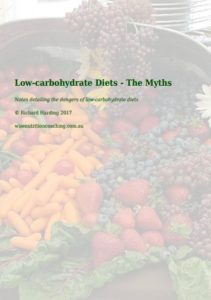
Carbohydrates DO NOT cause diabetes
Truth and Belief
Discover why researchers, popular commentators and the food industry is more concerned with maintaining corporate profits than ensuring that we have valid health information.Who is going to get wealthy by encouraging people to eat their fruit and vegetables?
Featured Posts
Why Consume a WFPB Diet?Brief Overview of WFPB Diets
Introduction
Where do You Get Your Protein?
The Problem with Cow's Milk
Breast, Endometrium and Ovarian Cancers
Eating Red Meat is Not Natural
Taiwan, Buddhists and Moderation
Autoimmune Diseases, Biomimicry and Type 1 Diabetes
Glucose Tolerance
7th-day Adventists and Health
Worried about eating eggs?
How Cooking Changed Us
Deception from The BMJ
Endometriosis is Curable
Changes to our Health Indicators
Cause of Type 2 Diabetes
DNA, Genetics and Epigenetics
The Myth of Good and Bad Cholesterol
The Traditional Diet of Inuit
Wheat and the Distorted Views of William Davis

Center for Nutrition Studies

Last Modified
- DNA, Genetics and Epigenetics 4 August 2026
- Wise Nutrition Coaching Home Page 4 August 2026
- Diet and Inflammatory Bowel Disease 4 August 2026
- Search Help 4 August 2026
- Robert (Bob) Sidney Newman Mitchell 2 August 2026
- The Traditional Diet of Inuit (or Eskimo) Peoples 31 July 2026
- The Problem With Cow's Milk 29 July 2026
- Heart of the Matter - ABC Catalyst 29 July 2026