Diseases


  • Rural Indian Regional Diets

    Despite India's reputation for a healthy, vegetarian cuisine, it is not justified. Only 1.6% of Indians are vegan, 24% are lacto-vegetarian. 3% add eggs to their lacto-vegetarian diet which leaves 72% consuming meat.

    The Indian population has the highest prevalence of diabetes worldwide and exhibits high-risk metabolic profiles at younger ages and lower body mass index than their Western counterparts. There are significant regional variations to this observation.

    The reasons why Asian populations exhibit diabetes at a lower threshold than western populations are not known.

    According to WHO mortality statistics, India is ranked 17 for Low Birth Rate, 37 for Diarrhoeal Diseases, 40 for Tuberculosis, 60 for Malnutrition and 62 for Influenza & Pneumonia out of 183 countries.

    Given the current increase in consumption of meat and oils and a decrease in grains, the prevalence of obesity and diabetes is likely to continue.

    Read more ⇨

  • Seventh-day Adventists and Health

    A strong commitment to health has been a part of Seventh Adventist’s tradition since in founding in the 1840s.

    Within the Californian Seventh-day Adventist community, as the diet becomes more vegetarian, so do the health outcomes.

    Californian Seventh-day Adventists are much healthier than the average American.

    Read more ⇨

  • Glucose Tolerance – Comparison of High-Fat and High-Carb Diets

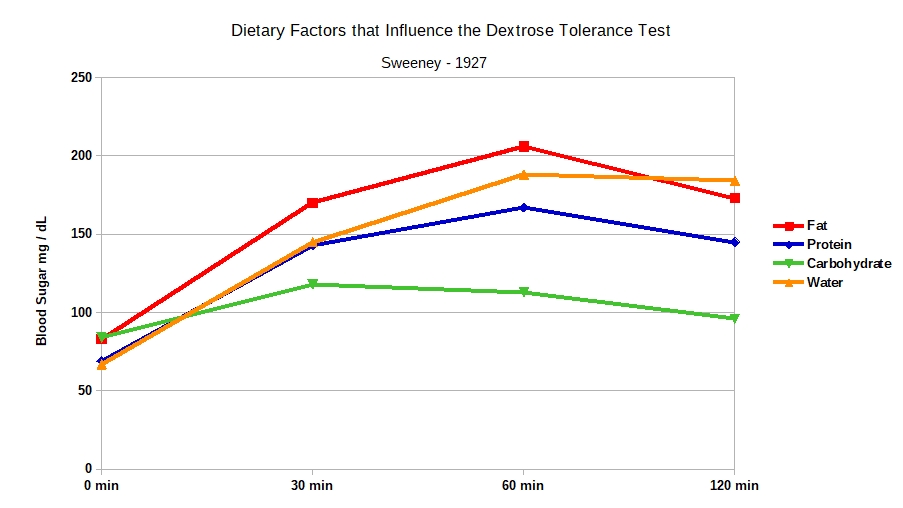
    Way back in 1927, J. S. Sweeney assigned healthy, young medical students into four dietary groups: A high-carbohydrate diet; a high-fat diet; a high-protein diet; and a fasting diet.

    After only two days on their highly improbable diets, the students were given a glucose tolerance test.

    Which diet had the best result for the Glucose Tolerance Test?
    Read more ⇨

  • Gut Health and Robert Beson

    Australian Traditional Medicine Society FUNCTIONAL GI SYMPOSIUM 2019 was held in Sydney on Sunday 15th September.

    Robert Beson presented a session Gut Health: Environmental & Internal Profile Consideration.

    Unfortunately, there is very little information regarding his proboitic treatments.

    Internet search results for "Robert Beson probiotics" or "Robert Beson gut healthy" lead to the Progurt website which sells probiotic supplements.

    Read more ⇨

  • Bread Does Not Make You Fat

    Most people are under the impression that starchy foods such as bread and potatoes make you fat.

    This is not the case - unless you cover your bread and potatoes with high-fat foods such as cheese, butter or sour cream.

    Excess sugars and carbohydrates are stored as glycogen - not fats. Carbohydrates are not converted to fats. Animals, bacteria and fungi convert glucose to glycogen which is the form that glucose is stored.

    Except in abnormal, extreme conditions, carbohydrates are not converted to fat in humans.

    Fats make you fat - not carbohydrates.

    Read more ⇨

  • Taiwanese Buddhist Study

    Everything in moderation is a near unanimous response by health professional, health support organisations and media commentators to solving our health crisis.

    A Taiwanese Buddhist study with 4,384 participants compared type 2 diabetes outcomes for lacto-ovo-vegetarians compared with those who consumed meat. The meat-eating group ate only a very small amount of meat.

    Read more ⇨

  • How do Your Genes Affect Obesity and Diabetes

    The purpose of the DIETFITS Trial was "to determine the effect of a healthy low-fat (HLF) diet vs a healthy low-carbohydrate (HLC) diet on weight change and if genotype pattern or insulin secretion are related to the dietary effects on weight loss".

    It a popular area of research to determine if there are genetic causes of obesity, diabetes, heart disease, autoimmune disease, depression and any other illness or condition that is plaguing our society.

    This area of research ignores the fact that often our genetics does not determine health outcomes.  Ignoring this will not solve the problems of our society's rapidly failing health.

    The conclusions of this paper are:

    In the 12-month study, there was NO significant difference in weight change between a healthy low-fat diet compared with a healthy low-carbohydrate diet.

    Neither of the 2 hypothesized predisposing factors [genotypes] was helpful in identifying which diet was better for whom.

    Frequently the problem is not that complicated.

    Read more ➱

  • Rheumatoid Arthritis and Fibrin

    Chronic inflammation is associated with many diseases and conditions. There are many inflammatory markers that can be measured. Researchers are continually looking to add to the list of makers to use to identifying diseases. C-Reactive Protein is one common but non-specific maker. Fibrinogen is another that some researchers have added to their inflammatory marker list.

    Read more ➱

  • Multiple Sclerosis and Roy Swank

    Roy Swank discovered a dietary connection with multiple sclerosis in the late 1940s following studies in Norway. He instigated a study that followed a group of multiple sclerosis patients for 34 years. He wrote a book, The Multiple Sclerosis Diet Book: A Low-Fat Diet for the Treatment of M.S.

    No other treatment plan has come close to achieving the results that Swank achieved.

    Read more ➱

  • Wheat and the Distorted Views of William Davis

    William Davis, a cardiologist, author of Wheat Belly, claims that “modern wheat is a perfect chronic poison”. He claims that modern wheat causes diabetes, inflammation, heart disease and high blood pressure and that eliminating wheat will cure these problems.

    Davis recommends the avoidance of foods such as corn, rice, quinoa, millet, buckwheat, beans and potatoes, even though they do not contain wheat or gluten.

    Davis's inconsistencies would be amusing if they did not have such serious health consequences.

    Read more ⇒


Search

Low-carbohydrate Diets - The Myths
Why Eggs Are Not OK
Dairy And Wheat
Low-carbohydrate Mania: The Fantasies, Delusions, and Myths

Center for Nutrition Studies

Center for Nutrition Studies