Diseases
-
Blood Cancers and a Whole-food Plant-based Diet
My name is Richard Harding.
I have been a Multiple Myeloma patient for 11 years which was diagnosed when 1 was 60 years old. Twice, 11 years ago [2014] my wife, Ruth, was told that I would not be coming home from hospital.
I have been involved with the teaching and the design of diploma and certificate courses for nutrition for two registered training organisations.
After six years of attempting to obtain compliance, we gave up.
I have a 150 page, 200000 word website advocating a Whole-Food, Plant-Based diets with NO ADDED OILS. No dressings. No olive oil, coconut oil or fish oil. (Very important).
Seventh-day Adventists show that Californian Seventh-day Adventists have a much greater life expectancy and a higher level of health than the average American.
Read more ⇒ -
Kidney Disease and Diet
2½ millennia ago, Plato wrote about the foolishness of eating animals. 500 years later Plutach wrote about the immorality of killing and eating animals who are entitled to life as much as we are.
Many people at the Mater Hospital where I am receiving treatment for multiple myeloma are not only dealing with their blood cancers but trauma of kidney, heart disease and type 1 and type 2 diabetes. Lots of great information about heart attacks and both forms of diabetes on my website.
The treatment greatly magnifies the severity of their problems.
Kidney disease ranks 9th in the cause of death in Australia.
Despite the nasty nature of my multiple myeloma disease, my kidney and heart functions are really good.
There is a really strong correlation between pork consumption and kidney disease. The method of cooking has a big impact due to the increase in serum creatinine with BBQ pig being the worst.
Then there is the additional problem with the appalling method that we raise pigs in confined cages that are stacked three deep. Pigs cannot move or lie down. Their faeces and urine are deposited onto the pigs below through slatted floor boards. They live in a noxious atmosphere of ammonia and hydrogen sulphide.
Read more ⇒ -
Endometriosis is Curable Without Supplements
The WHO states the endometriosis is incurable and the cause is unknown. Using references from peer-reviewed medical journals and case studies, I can show that this is not true.
It is caused by an overabundance of oestrogen, in particular oestradiol which is the result of a high-fat, high-protein diet as advocated by low-carbohydrate and ketogenic diet advocates such as Dr James Muecke, the 2020 Australian of the Year. Many references are provided from my website.
Read more ⇒ -
Introduction to Wise Nutrition Coaching
To eat fully consciously connects us to the miracle of all life.
The WHO states the endometriosis is incurable and the cause is unknown. Using references from peer-reviewed medical journals and case studies, I can show that this is not true.
It is caused by an overabundance of oestrogen, in particular estradiol which is the result of a high-fat, high-protein diet as advocated by low-carbohydrate and ketogenic diet advocates such as Dr James Muecke, the 2020 Australian of the Year. Many references are provided on my website.
I have a 150 page, 120000 word website explaining how informed choices relating to the food we consume can result in optimal outcomes for our health, the environment and for the animals that we share the earth.
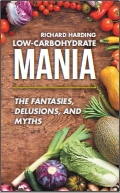
When I published my book Low-Carbohydrate Mania: Fantasies, Illusions, and Myths, I posted Dr John McDougall a copy to his practice in Santa Rosa, California. We communicated by email for nearly a year. Mostly the correspondence was concerned with the views of William Davis and Robert Lustig. He viewed both with some – let’s say, bewilderment.
Whole-food, plant-based diets without added oils or simple carbohydrates are best for our health, the environment and the animals we share the earth with.
Read more ⇒ -
PCSK9 Gene – Reduces Cholesterol and Heart Disease Mortality
High levels of cholesterol and LDL-cholesterol are associated with a higher risk of heart disease.
Popular commentators frequently claim that cholesterol is irrelevant in causing heart disease and suggest that diets high in carbohydrate such as rice, potatoes, wheat (including whole-grain wheat), yams, millet and buckwheat are responsible.
PCSK9 is a gene that reduces the life-time level of cholesterol. PCSK9 is an abbreviation for "proprotein convertase subtilisin/kexin type 9 serine protease" gene which is why it is much more convenient to refer it as the PCSK9 gene.
The authors' conclusion is the "data indicate that moderate lifelong reduction in the plasma level of LDL cholesterol is associated with a substantial reduction in the incidence of coronary events."
Read more ⇒ -
The Traditional Diet of Inuit (or Eskimo) Peoples
The traditional diet of the Inuit people was first examined comprehensively by Vilhjalmur Stefansson in 1906. He visited the Copper Inuits during a number of expeditions. Their diet was virtually plant-free, dominated by seal and caribou meat, supplemented by large salmon-like fish and occasional whale meat. However, Stefansson found that cooking was the nightly norm.
Read more ⇒ -
Where Do You Get Protein on a Vegan Diet?
“Where do you get your protein?” (or iron or calcium) is a frequent question for those on a vegan diet. Well, the same place as gorillas, elephants, the grumpy extinct aurochs, brontosaurus and Argentinosaurus- the largest ever land animal weighing more than 15 elephants. From eating plants.
Milks are complex lipid emulsions in water containing protein, fat, lactose, vitamins and minerals, as well as enzymes, hormones and immunoglobulins which provide initial immunity functions.
There is approximately 5,500 species of mammals which initially supply their young with milk. There are vast differences in milk composition among the mammal species. Of all the mammals, humans have the lowest protein content.
Mammals have evolved over millions of years to provide nutrition for their infants in the first stage of life. There are significant difference between species depending upon factors such as rates of growth.
Proteins in human milk provide sufficient of protein to sustain infants for the first six months without any additional food, as well as supplying the means of establishing suitable environment for the growth of healthy intestinal bacteria and providing the proteins involved in the immune system.
Human milk is supplied to babies when the need for protein is at the greatest. Babies double in size during the first 6 months of our lives. The ideal food for a baby is mum’s milk where 5% – 6.5% is protein. This should offer reassurance that as long as we a consuming an adequate diet, we do not need a high protein diet.
Read more ⇒ -
Methionine Dependent Cancers
Homocysteine is a non-protein amino acid. It is synthesized in the body from methionine, which is a sulfur containing amino-acid.
Methionine is much more prevalent in animal products than plant products. Rotten eggs smell the way they do because the sulfur produces a number of sulfur containing gases including hydrogen sulfide— rotten egg gas.
A high level is of homocysteine is associated with an increased risk for chronic inflammation, cardiovascular disease, and Alzheimer’s disease.
Many human cancer cell and primary tumors have a requirement for methionine, an essential amino acid.
Methionine-free or methionine-deprived diet causes a regression of a variety of animal tumours.
Read more ⇨ -
How to Survive a Pandemic by Michael Greger
How to Survive a Pandemic by Michael Greger is essential reading for those who wish to understand the history of pandemics and how to minimise their impact on ourselves and our society. The book describes the causes of these diseases and most importantly, how to prevent these events from occurring.
The majority of infectious diseases (and all viral diseases) result from our interaction with animals. This book, with thousands of references, gives detailed descriptions of our greatest diseases from bubonic plague, smallpox, the deadly influenza of 1918 and the deadly viral diseases SARS, MERS and COVID-19.
Read more ⇨ -
Is It Healthy? What are we Comparing
When we ask the question Is it Healthy?, we need to consider is it healthy compared to what.
Read more ⇨
Font Resizer
Search

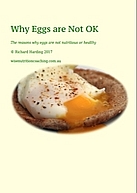

 Discover why researchers, popular commentators and the food industry is more concerned with maintaining corporate profits than ensuring that we have valid health information.
Who is going to get wealthy by encouraging people to eat their fruit and vegetables?
Featured Posts
Introduction to Wise Nutrition CoachingIntroduction to WFPB Diets
Introduction to Sex-hormonal Related Cancers and Endometriosis
Why Consume a WFPB Diet?
Where do You Get Your Protein?
The Problem with Cow's Milk
Breast, Endometrium and Ovarian Cancers
Eating Red Meat is Not Natural
Taiwan, Buddhists and Moderation
Autoimmune Diseases, Biomimicry and Type 1 Diabetes
Glucose Tolerance
7th-day Adventists and Health
Worried about eating eggs?
How Cooking Changed Us
Deception from The BMJ
Endometriosis is Curable
Changes to our Health Indicators
Cause of Type 2 Diabetes
DNA, Genetics and Epigenetics
The Myth of Good and Bad Cholesterol
The Traditional Diet of Inuit
Wheat and the Distorted Views of William Davis
Vegan Starter Kit
Center for Nutrition Studies

Last Modified
- Search Help 6 November 2026
- Ancel Keys and the Mediterranean Diet 6 November 2026
- Additional Reading 6 November 2026
- Whole-Food Plant-Based Diet: The Evidence - Wise Nutrition 6 November 2026
- Kidney Disease and Diet 6 November 2026
- Dan Repacholi - Health Advocate 6 November 2026
- Ruth Heidrich, Hawaiian Athlete and Breast Cancer Reversal 6 November 2026
- What If It’s All Been a Big Fat Lie? 6 November 2026
- A Guide to Optimal Well-being 6 November 2026
- Introduction to Wise Nutrition Coaching 6 November 2026