Diabetes and Obesity


  • Why do Seventh-day Adventists Live the Longest

    A strong commitment to health has been a part of Seventh Adventist’s tradition since in founding in the 1840s.

    Within the Californian Seventh-day Adventist community, as the diet becomes more vegetarian, so do the health outcomes.

    Californian Seventh-day Adventists are much healthier than the average American.

    Read more ⇨

  • Glucose Tolerance – Comparison of High-Fat and High-Carb Diets

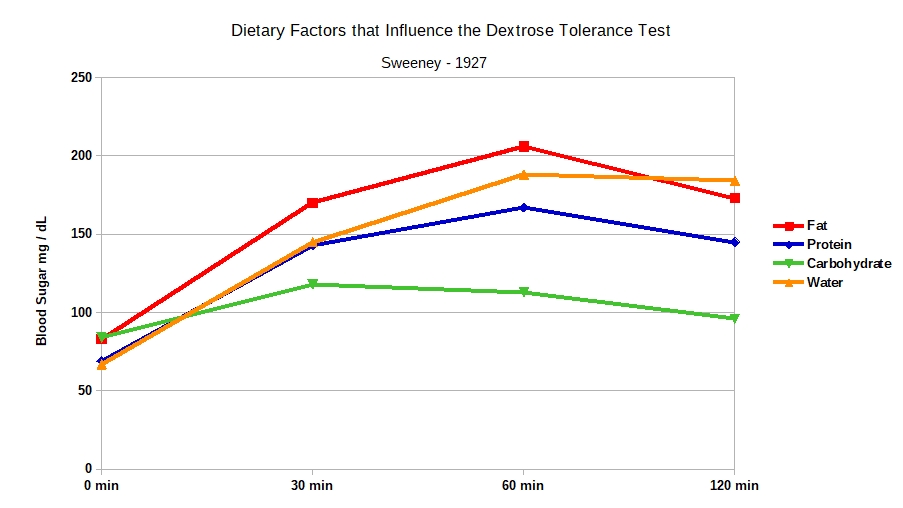
    Way back in 1927, J. S. Sweeney assigned healthy, young medical students into four dietary groups: A high-carbohydrate diet; a high-fat diet; a high-protein diet; and a fasting diet.

    After only two days on their highly improbable diets, the students were given a glucose tolerance test.

    Which diet had the best result for the Glucose Tolerance Test?
    Read more ⇨

  • Bread Does Not Make You Fat

    Most people are under the impression that starchy foods such as bread and potatoes make you fat.

    This is not the case - unless you cover your bread and potatoes with high-fat foods such as cheese, butter or sour cream.

    Excess sugars and carbohydrates are stored as glycogen - not fats. Carbohydrates are not converted to fats. Animals, bacteria and fungi convert glucose to glycogen which is the form that glucose is stored.

    Except in abnormal, extreme conditions, carbohydrates are not converted to fat in humans.

    Fats make you fat - not carbohydrates.

    Read more ⇨

  • Taiwanese Buddhist Study: Vegetarian Diets and Health

    Everything in moderation is a near unanimous response by health professional, health support organisations and media commentators to solving our health crisis.

    A Taiwanese Buddhist study with 4,384 participants compared type 2 diabetes outcomes for lacto-ovo-vegetarians compared with those who consumed meat. The meat-eating group ate only a very small amount of meat.

    Read more ⇨

  • How do Your Genes Affect Obesity and Diabetes

    The purpose of the DIETFITS Trial was "to determine the effect of a healthy low-fat (HLF) diet vs a healthy low-carbohydrate (HLC) diet on weight change and if genotype pattern or insulin secretion are related to the dietary effects on weight loss".

    It a popular area of research to determine if there are genetic causes of obesity, diabetes, heart disease, autoimmune disease, depression and any other illness or condition that is plaguing our society.

    This area of research ignores the fact that often our genetics does not determine health outcomes.  Ignoring this will not solve the problems of our society's rapidly failing health.

    The conclusions of this paper are:

    In the 12-month study, there was NO significant difference in weight change between a healthy low-fat diet compared with a healthy low-carbohydrate diet.

    Neither of the 2 hypothesized predisposing factors [genotypes] was helpful in identifying which diet was better for whom.

    Frequently the problem is not that complicated.

    Read more ➱

  • Is Wheat Bad for You? A Response to Wheat Belly

    William Davis, a cardiologist, author of Wheat Belly, claims that “modern wheat is a perfect chronic poison”. He claims that modern wheat causes diabetes, inflammation, heart disease and high blood pressure and that eliminating wheat will cure these problems.

    Davis recommends the avoidance of foods such as corn, rice, quinoa, millet, buckwheat, beans and potatoes, even though they do not contain wheat or gluten.

    Davis's inconsistencies would be amusing if they did not have such serious health consequences.

    Read more ⇒

  • The Ketogenic diet slays the opposition? – not true

    An article titled, How the Keto diet – even without exercise - slays the opposition, by Derek Beres was published on Think Big website on 11th December 2017.

    The Gibas study quoted by the article claims that ketosis is a useful and valid tool to control metabolic syndrome, diabetes and obesity.

    Read more ⇨

  • Robert Lustig and The Men Who Made Us Fat

    Robert Lustig is a pediatric endocrinologist at the University of California, San Francisco. He is the author of Fat Chance: Beating the Odds against Sugar, Processed Food, Obesity, and Disease. He specializes in childhood obesity and studying the effects of sugar in the diet. He is the director of the UCSF Weight Assessment for Teen and Child Health Program and a member of the Obesity Task Force of the Endocrine Society.

    Unfortunately, much of what he says is simply wrong, which given the amount of media exposure that he receives, is deeply worrying.

    Read more ➱

  • The Pioppi Diet

    The Pioppi Diet movie and book by Aseem Malhotra, a London cardiologist and Donal O’Neill, an Irish film-maker that receives a great deal of publicity. A review in the British Journal of General Practice quotes Professor Dame Sue Bailey, the Chair of the Academy of Medical Royal Colleges, who describes the book as a “must have for every household and a must read for every medical student and doctor”.

    Andy Burnham, current (2021) mayor of Greater Manchester and former UK Secretary of State for Health writes,

    This book has the power to make millions of people healthier and happier.

    Pioppi is a small village on the Tyrrhenian Sea which is located on the west coast of Italy. It is approximately 150 km (90 miles) south of Naples. Ancel and Margaret Keys resided here for over 25 years. Martii Karvonen of Finland and Jerimiah Stamler of the USA are other well-known medical researchers who resided in the village.

    Malhotra is a keen high-fat, low-carbohydrate diet advocate and is desperately trying (unsuccessfully) to merge his opinion into a distorted view of the Mediterranean diet.

    Read more ➱

  • Do vegetarians live longer?

    On 2nd February 2017, Melody Ding, a senior researcher from the University of Sydney published an article in The Conversation titled “Do vegetarians live longer? Probably, but not because they’re vegetarian”. Her preferences were revealed early in the article when she writes, “vegetarianism and its more austere cousin, veganism, are becoming increasingly popular”.

    A person calling a vegan diet austere does not know how to cook.

    There is overwhelming evidence that vegans (and particularly whole-food, plant-based vegans) live longer and healthier lives.

    Read more ➱


Search

Low-carbohydrate Mania: The Fantasies, Delusions, and Myths

Center for Nutrition Studies

Center for Nutrition Studies