Tag: wfpb diet
-
About Angela Carey
Angela Carey is a Naturopathic Practitioner and Registered Nurse with over 20 years experience located in East Maitland in the Hunter Valley. Having cured herself from a chronic autoimmune condition, she can assist her clients to return to optimal health. She is able to work closely with you to tackle any health challenges you may have. With lifestyle, dietary and nutritional changes, she can assist you to maximise your body's potential to heal.
Read more ⇨ -
Effect of Single High Fat Meal on Blood Flow
MARS Center for Cocoa Health Science is based at University of California – Davis Campus (which is near Sacramento). Ronald Krauss, one of the authors of Astrup’s 2019 paper WHO draft guidelines on dietary saturated and trans fatty acids: time for a new approach? is based at University of California – San Francisco campus.
MARS has contributed $40 million to fund the institute.
Between 2000 and 2021, the MARS institute has produced 157 articles extolling the benefits of chocolate and cocoa.
“Everyone knows” that chocolate is really healthy and good for you based on research such as this.
Read more ⇨ -
The French Paradox – The Myths
“Everyone knows” about the French Paradox – that is, the French consume lots of saturated fat in the form of meat, butter, cheese and eggs and yet have a low risk of heart disease. This proves that the health advice regarding the role of fats and saturated fats in causing heart disease is wrong.
The French Paradox has only been with us for a short period of time but it quickly resonated with the general population – we no longer need to be concerned about the amount of meat, butter, cheese and eggs that we consume.
Read more ⇨ -
PREDIMED Trial – Mediterranean Diet with Olive Oil or Nuts
The PREDIMED trial assigned 7447 participants ranging from 55 to 80 years of age who were at high cardiovascular risk, but with no cardiovascular disease at enrollment, to one of three diets: a “Mediterranean Diet” supplemented with extra-virgin olive oil; a “Mediterranean Diet” supplemented with mixed nut; or a control diet with advice to reduce dietary fat.
The “Mediterranean Diet” was the participants normal diet.
50% of the participants that did not have metabolic syndrome at the start of the trial, were afflicted at the end of the trial, irrespective of which of the 3 groups the particpants were assigned.
Read more ⇨ -
Lyon Diet Heart Study
The Lyon Diet-Heart Study was a
“randomized, single-blind secondary prevention trial aimed at testing whether a Mediterranean-type diet, compared with a prudent Western-type diet, may reduce recurrence after a first myocardial infarction.”
The study consisted of 605 patients who had recovered from a myocardial infarction at a hospital in southern France. The experimental group emphasised “more bread, more root vegetables and green vegetables, more fish, less meat (beef, lamb and pork to be replaced with poultry), no day without fruit, and butter and cream to be replaced with margarine” which was high in alpha-linolenic acid (an omega-3 fatty acid).
Read more ⇨ -
Ancel Keys and the Mediterranean Diet
In 1951, Keys was working at Oxford when the Food and Agriculture Organization asked him to chair their first conference on nutrition in Rome. Keys stated, “The conferees talked only about nutritional deficiencies”.
When he asked about the new epidemic of coronary heart disease, Gino Bergami, Professor of Physiology at the University of Naples, said , “Coronary heart disease was no problem in Naples”.
In 1952, Keys and his wife Margaret visited Naples. Margaret measured serum cholesterol concentrations and found them to be very low except among members of the Rotary Club. Heart attacks were rare except amongst the rich whose diet included daily servings of meat. He obtained similar results in studies in Madrid.
Ancel Keys and colleagues posed the hypothesis that differences among populations in the frequency of heart attacks and stroke would occur as a result of physical characteristics and lifestyle and diet. Surveys were carried out between 1958 - 1970 in populations of men aged 40-59, in sixteen areas of seven countries. Follow-up surveys were continued until the 1990s. Most of the areas were stable and rural and had wide contrasts in habitual diet.
Read more ⇨ -
Why do Seventh-day Adventists Live the Longest
A strong commitment to health has been a part of Seventh Adventist’s tradition since in founding in the 1840s.
Within the Californian Seventh-day Adventist community, as the diet becomes more vegetarian, so do the health outcomes.
Californian Seventh-day Adventists are much healthier than the average American.
Read more ⇨ -
Are Healthy Diets More Harmful to the Environment
On December 14, 2015 an article titled Vegetarian and “Healthy” Diets Could Be More Harmful to the Environment was published on the Carnegie Mellon University website.
The article quotes Paul Fischbeck, a professor of social and decisions sciences and engineering and public policy at the institute.
He was a co-author of a paper Energy use, blue water footprint, and greenhouse gas emissions for current food consumption patterns and dietary recommendations in the US.
Professor Fischbeck is quoted in the website article, stating:
“Eating lettuce is over three times worse in greenhouse gas emissions than eating bacon. Lots of common vegetables require more resources per calorie than you would think. Eggplant, celery and cucumbers look particularly bad when compared to pork or chicken.”
Read more ⇨ -
Diet and Breast, Ovarian and Endometrial Cancers
There are hundreds, if not thousands, of papers in peer-reviewed medical journals dating back to the mid 1980s relating to the causes and preventative of breast, cervical, ovarian, endometrial and corpus uterine cancers. Unfortunately, this information is generally not read by medical practitioners, specialists or health support organisations.
For example, a 1982 paper (more than 4 decades ago) states that "the concept that hormones can cause human cancer, is most developed for the four hormone-related cancers which are breast, prostate, endometrium, and ovary".
Read more ➱ -
Pink Day Blues
In 1985, National Breast Cancer Awareness Month (October) was created by the American Cancer Society. Funding was provided by Zeneca (later AstraZenca) , a British pharmaceutical company. AstraZenca is still (as at 2018) associated with Breast Cancer Awareness Month. AstraZenca produces Tamoxifen. Tamoxifen is an estrogen antagonist or anti-estrogen drug which works by blocking the effects of estrogen.
Pink Day is one day in October which is designated to create awareness of breast cancer and to raise money for research.
Lifetime exposure to estrogen is 2.5-3 times higher in Western women than rural Chinese women in the 1980s. China women reach menarche later, menopause earlier and have reduced levels of estrogen, progesterone and testosterone during their reproductive years.
There is much evidence that increased levels of estrogen, progesterone and testosterone are associated with a significant increase in breast cancer as well as evidence that low-fat, high carbohydrate diet reduces the level of these hormones.
Read more ➱
Font Resizer
Search



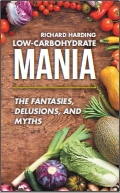
 Discover why researchers, popular commentators and the food industry is more concerned with maintaining corporate profits than ensuring that we have valid health information.
Who is going to get wealthy by encouraging people to eat their fruit and vegetables?
Featured Posts
Introduction to Wise Nutrition CoachingIntroduction to Whole-food, Plant-based Diets
Introduction to Sex-hormonal Related Cancers and Endometriosis
Why Consume a Whole-food, Plant-based Diet?
Where do You Get Your Protein?
Where Do You Get Your Iron and Calcium?
Where Do You Get Your Vitamin D?
Is Cow’s Milk Healthy?
Diet and Breast, Prostate, Ovarian and Endometrial Cancers
Why are so Many People Getting Dementia?
Are Humans Meant to Eat Red Meat?
Taiwanese Buddhist Study
What Causes Type 2 Diabetes?
A Guide to Glucose Tolerance
Why do Seventh-day Adventists Live the Longest
Blue Zones: What the Longest-Lived People Eat
Are Eggs Bad for You?
How Cooking Food Made Us Human
Deception from The BMJ
Endometriosis and Diet
Changes to our Health Indicators
What Causes Type 2 Diabetes
What is the Role of DNA in Determining our Health?
Is There Really Good and Bad Cholesterol?
The Traditional Diet of Inuit
Is Wheat Bad for You?
Vegan Starter Kit
Center for Nutrition Studies

Last Modified
- What are the Benefits and Concerns Regarding Vaccinations? 15 November 2026
- How to Prevent Aneurysms With Diet 15 November 2026
- Where do you get Vitamin D? 14 November 2026
- Where Do You Get Your Iron and Calcium on a Vegan Diet? 14 November 2026
- Tornadoes, Seagulls and the Butterfly Effect 13 November 2026
- How Cooking Food Made Us Human 12 November 2026
- Why are so Many People Getting Dementia? 11 November 2026
- How do Your Genes Affect Obesity and Diabetes 11 November 2026
- Dr. James Muecke's Diabetes Advice: A Closer Look 11 November 2026
- Changes to our Health Indicators 11 November 2026