Agriculture
-
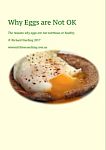
Eggs are Not OK
Australians’ usual egg consumption is a document prepared by researchers at the CSIRO. The CSIRO is the premier Australian government-funded research organisation.
The conclusion of this document states:
Eggs provide a low cost, convenient source of protein and other key nutrients. Our results [from the Healthy Diet Score survey] suggest their inclusion in the diet is associated with a higher diet quality, in particular higher consumption vegetables and lower consumption of discretionary foods.This document is a marketing document. It needs a lot of imagination to make such a conclusion from the CSIRO’s published research papers. This conclusion also contradicts a number of other studies that show consuming eggs is detrimental.
I sent an email on 28th October 2017 to the lead author of this document, Dr Gilly Hendrie. Hendrie is also the lead author of a number of journal articles relating to the Healthy Diet Index. A copy of this email can be found at CSIRO Healthy Diet Score and Egg Consumption in Australia.
The response will be published when it is received.
Read more ➱ -
How Cooking Changed Us
Richard Wrangham is a Professor of Biological Anthropology at Harvard University. He is also the curator of Primate Behavioral Biology at the Peabody Museum in Cambridge, Massachusetts and a director of the Kibale Chimpanzee Project in Uganda.
Wrangham began his career at Gombe Stream National Park in Tanzania as a member of Jane Goodall's chimpanzee research team.
The standard view of evolution is that by eating meat, humans were able to evolve the larger brains that distinguish us from other primates. Wranghams’s view is that cooking food is a fundamental activity that transformed humans and our society. He is not the first to propose this view but has developed the concept.
Cooking increased the value of our food. It changed our bodies, our brains, our use of time and our social relationships.
Read more ➱ -
Kale – a super green
Kale - a super green Kale has an extensive array of minerals and vitamins including vitamin K, vitamin A, vitamin C, B vitamins, vitamin E, calcium, iron, potassium, magnesium, and copper.
Kale is also rich in proteins and moderately rich in a linolenic acid (ALA – an essential omega 3 fatty acid).
Read more ⇒ -
US Department of Agriculture
The US Department of Agriculture has an extensive database of the nutrient constituents of over 8,000 foods. The amount of protein, carbohydrates, fibre and fat in food can be accessed as well as the individual fatty acids, amino acids, minerals and vitamins.
There are also many other resources including research data and information regarding the food intake of US citizens.
The US Department of Agriculture has an extensive resources regarding food and nutrition including a database of the nutrient constituents of over 8,000 foods. The amount of protein, carbohydrates, fibre and fat in food can be accessed as well as the individual fatty acids, amino acids, minerals and vitamins.
Read more ⇒ -
The China Study
Colin Campbell was a nutritional biochemist at Cornell University. In the 1960s, he was involved in nutritional programs in the Philippines to help families provide for their critically undernourished children. Peanuts were one of their preferred sources of protein. It is a legume – great for improving the soil, easy to grow and is nutritious and tasty.
At the same time, children younger than 10 were dying at alarming rates from liver cancer. Normally liver cancer is an adult disease. And the children dying from the disease were from the most affluent suburbs in Manilla. These are the families that could afford the best housing and the best food.
Whilst in the Philippines, he read a paper in an obscure medical journal. Rats were fed aflatoxin – one of the deadliest carcinogens known. One group of rats was given a diet of 20% protein – and they all died of liver cancer. The second group was given a diet of 5% protein – they all lived. 100% deaths compared to 0 deaths. They were all fed aflatoxin – but only those rats that had a high protein diet died.
Read more ➱
Font Resizer
Search
However, the study has been funded by the dairy and beef industries.
Discover how industry-funded research is deceiving the public.
Carbohydrates DO NOT cause diabetes
Truth and Belief
Discover why researchers, popular commentators and the food industry is more concerned with maintaining corporate profits than ensuring that we have valid health information.Who is going to get wealthy by encouraging people to eat their fruit and vegetables?
Featured Posts
Why Consume a WFPB Diet?Brief Overview of WFPB Diets
Introduction
Where do You Get Your Protein?
The Problem with Cow's Milk
Breast, Endometrium and Ovarian Cancers
Eating Red Meat is Not Natural
Taiwan, Buddhists and Moderation
Autoimmune Diseases, Biomimicry and Type 1 Diabetes
Glucose Tolerance
7th-day Adventists and Health
Worried about eating eggs?
How Cooking Changed Us
Deception from The BMJ
Endometriosis is Curable
Changes to our Health Indicators
Cause of Type 2 Diabetes
DNA, Genetics and Epigenetics
The Myth of Good and Bad Cholesterol
Wheat and the Distorted Views of William Davis

Center for Nutrition Studies

Last Modified
- The Problem With Cow's Milk 29 July 2026
- Heart of the Matter - ABC Catalyst 29 July 2026
- Gut Health and Robert Beson 28 July 2026
- Antimicrobial Resistance, Antibiotics and Endometriosis 28 July 2026
- Gut Bacteria, TMAO and Whole-food, Plant-based Diets 28 July 2026
- Wheat and the Distorted Views of William Davis 28 July 2026
- The Traditional Diet of Inuit (or Eskimo) Peoples 28 July 2026
- Search Help 28 July 2026
- The Myth of Good and Bad Cholesterol 28 July 2026
- DNA, Genetics and Epigenetics 27 July 2026
- Information About Breast, Endometrium and Ovarian Cancers 27 July 2026
- Eating Red Meat is Not Natural 25 July 2026