Tag: dairy
-
Impact of Gluten-free Diets
There is a substantial difference between a standard western diet and a gluten-free diet. If a gluten-free diet is no warranted, a gluten-free diet may have unintended health consequences that are not beneficial as well as creating an additional inconvenience.
Consumption of complex carbohydrates (polysaccharides) and dietary fibre can be significantly less.
Read more ⇨ -
Wheat and Inflammation
William Davis is largely responsible for the low-wheat, low-gluten diets with the publication of his book Wheat Belly. In this book he states that we live in a ‘whole grain world’ and that wheat is responsible for the majority of our modern illnesses including wheat.
Find out what the role of wheat is in inflammation.
Read more ⇨ -
WHO’s Guidelines on Saturated Fats – The Reality and the Myths – View the Movie
On the 4th July 2019, the ABC published this news item as its top news story.
World Health Organisation's recommendations on saturated fat are out of date, expert team says.
It was based on an article, WHO draft guidelines on dietary saturated and trans fatty acids: Time for a new approach? published in THE BMJ the previous day, which was written by Arne Astrup and 17 colleagues.
At least 13 of the 18 authors of this paper, have received funding from the dairy and beef industries.
Whilst the links to the dairy and beef industries are noted in THE BMJ article, it is not mentioned in the ABC's article. There is no mention that the researchers have been paid millions of dollars by the dairy, beef and chocolate industries.
t is not responsible to leave the information published in ABC’s article to be uncorrected. The majority of readers will only see the statement,
A global team of researchers has taken aim at World Health Organisation draft guidelines that recommend people reduce their saturated fat intake.
The picture accompanying the article shows burger, chips, eggs, and baked beans.
The readers’ conclusion - eating bacon and eggs is no longer considered to be unsafe.
Read more ⇒ -
Are Healthy Diets More Harmful to the Environment
On December 14, 2015 an article titled Vegetarian and “Healthy” Diets Could Be More Harmful to the Environment was published on the Carnegie Mellon University website.
The article quotes Paul Fischbeck, a professor of social and decisions sciences and engineering and public policy at the institute.
He was a co-author of a paper Energy use, blue water footprint, and greenhouse gas emissions for current food consumption patterns and dietary recommendations in the US.
Professor Fischbeck is quoted in the website article, stating:
“Eating lettuce is over three times worse in greenhouse gas emissions than eating bacon. Lots of common vegetables require more resources per calorie than you would think. Eggplant, celery and cucumbers look particularly bad when compared to pork or chicken.”
Read more ⇨ -
Letter to Diggers – October 2018
In the Spring 2018 edition of Diggers, Bel P claims that What The Health has been “expertly torn to pieces”. No effort has been made to justify this claim. What The Health web site has listed approximately 300 references for the movie with the elapsed time that the information was presented.
In the absence of a valid critique of What The Health, I will present some evidence presented by the movie for the health benefits of a whole-food, plant-based diet. All references provided are from primary sources for which I have the paper or electronic copy.
Read more ➱ -
Eye Cataracts and Diet
There are four eye disease in the US that accounts for 75% of the cases for blindness and 85% of cases of visual impairment for adults 40 years and older in the US.
Age-related macular degeneration (AMD), cataracts, diabetic retinopathy – blood vessels in the retina leak fluid or bleed caused by diabetic complications and glaucoma - slow clogging of the drainage canals which results in increased eye pressure.
The effect of diet on eye health is much greater than expected given the amount of attention paid to the effect of sunlight on both our eyes and our skin.
Read more ➱ -
Foundations of Naturopathic Nutrition by Fay Paxton – a text book
Fay Paxton (PhD) is an Australian-based naturopath and nutritionist. She has taught nutrition at the Southern School of Natural Therapies and has worked as a consultant for dietary and herbal supplement manufacturers.
She is an author of a popular text book, Foundations of Naturopathic Nutrition.
Unfortunately, she is an advocate for low-carbohydrate diets and paleo diets.
Read more ➱ -
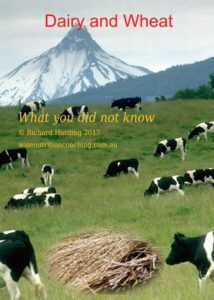
Dairy and Wheat – Obtain your copy
The CSIRO (an Australian government research organisation) reports that, “as many as 1 in 10 Australian adults were avoiding or limiting their consumption of wheat-based products. Over half of those…
-
Dairy, Gluten and Autism
Autism is defined by a set of behaviours. Key symptoms are: an extreme introversion; social indifference; stereotyped repetitive behaviours; language problems; problems with hygiene; temper tantrums; in some cases hyperactivity; irrational fears; decreased but fluctuating insensitivity to pain.
At 2010, the rate of autism at age 8 was 14.7 per 1,000 which is 1 in 68. Boys are 4.5 times more likely to be affected than girls—rate for boys is 1 in 42 compared with 1 in 189 for girls.
Rates of autism have been rising dramatically. The 2010 rate is: 29% higher than the preceding estimate of 1 in 88 children in 2008; 64% higher than the 2006 estimate of 1 in 110 children; 123% higher than the 2002 estimate of 1 in 150 children.
Black children are affected at a rate 14% higher than Hispanic children and white children affected 45% more than Hispanic children.
The association of autism with severe gastrointestinal problems has been documented since the 1990s.
Read more ➱ -
The A2 Milk Story
The hypothesis that A2 milk was protective of type 1 diabetes originated with a paper published in 1992. Robert Elliott observed much lower rates of type 1 diabetes amongst Polynesian children that were raised on the Polynesian islands compared with those raised in Auckland. This was attributed to the differences in the β-casein profile.
Elliott was the lead author of a conference paper that examined the effects of feeding casein to non-obese diabetic (NOD) mice. The conclusion was that “the induction of diabetes by casein in the NOD mouse appears to be restricted to casein containing the A1 variant of beta-casein”.
The marketing potential of such a discovery could be enormous.
Read more ➱
Font Resizer
Search
However, the study has been funded by the dairy and beef industries.
Discover how industry-funded research is deceiving the public.
Carbohydrates DO NOT cause diabetes
Truth and Belief
Discover why researchers, popular commentators and the food industry is more concerned with maintaining corporate profits than ensuring that we have valid health information.Who is going to get wealthy by encouraging people to eat their fruit and vegetables?
Featured Posts
Why Consume a WFPB Diet?Brief Overview of WFPB Diets
Introduction
Where do You Get Your Protein?
The Problem with Cow's Milk
Breast, Endometrium and Ovarian Cancers
Eating Red Meat is Not Natural
Taiwan, Buddhists and Moderation
Autoimmune Diseases, Biomimicry and Type 1 Diabetes
Glucose Tolerance
7th-day Adventists and Health
Worried about eating eggs?
How Cooking Changed Us
Deception from The BMJ
Endometriosis is Curable
Changes to our Health Indicators
Cause of Type 2 Diabetes
DNA, Genetics and Epigenetics
The Myth of Good and Bad Cholesterol
The Traditional Diet of Inuit
Wheat and the Distorted Views of William Davis

Center for Nutrition Studies

Last Modified
- DNA, Genetics and Epigenetics 4 August 2026
- Wise Nutrition Coaching Home Page 4 August 2026
- Diet and Inflammatory Bowel Disease 4 August 2026
- Search Help 4 August 2026
- Robert (Bob) Sidney Newman Mitchell 2 August 2026
- The Traditional Diet of Inuit (or Eskimo) Peoples 31 July 2026
- The Problem With Cow's Milk 29 July 2026
- Heart of the Matter - ABC Catalyst 29 July 2026