Tag: descartes


  • Some Notes About Statistics

    Most statistics are created by making adjustments to observed values that transform these values into useful inferences.

    These adjustments result in reporting NOT what was observed. These adjustments can be valid and useful depending upon these adjustments. It also depends upon the motivation of those making the adjustments - that is, what beliefs that they wish to communicate to a wider audience.

    There are a number of people who believe that smoking is not nearly as harmful as most believe and that eating bacon and egg rolls for breakfast each day is OK because my great-uncle lived to be 95 and died after spending the day riding his horse around the boundary of his rural property. Statistics can be provided to validate this.

    Adjustments can be harmful if poorly motivated and are often misinterpreted in the reporting of studies. The assumptions made often omitted without any justification.

    The reporting of the results in the media only highlights basic findings. For example, we all “know” that mammagrams and PSA testing has resulted in longer survival times - ignoring the effect of “lead time bias". In reality, the increase in “survival time” is a result of living longer knowing that you are unwell - you are still dying on the same day.

    Read more ⇒

  • Wise Nutrition Coaching Home Page

    To Eat Fully Consciously Connects Us To The Miracle Of All Life

    The diets that are optimal for our health are also the best for the environment and for the animals that we share the earth with.

    Read more ⇒

  • Pop Psychology, Alice and the Concept of Evil

    Pop psychology has a habit of taking ideas from psychology and science and transforming them into half-truths – ideas that can be simplistic and misleading.

    Some examples include ego and intuition.

    With the help of Alice (from Alice Through the Looking Glass), we will also explore the concept of EVIL.

    Read more ⇨

  • The Enlightenment and the Age of Reason

    Popular commentators often contend the The Enlightenment and The Age of Reason was accompanied by a loss of connection with our emotional and intuitive instincts resulting in a purely mechanical view of nature and the universe.

    Galileo Galilei (1564-1642) is one of the modern instigators of the “Age of Reason” although similar sentiments can be found in other cultures such as ancient Greece and Islamic civilisations. He believed that knowledge must be found in sensory experience - in observation. However, he was aware that our senses can be deceived. He was a supporter of Nicolaus Copernicus' (1473-1543) view that the sun was at the centre of the solar system even though each day we see the sun rise in the east and set in the west.

    Read more ➱

Search


WHO's recommendations on saturated fat are out of date, expert team says.
However, the study has been funded by the dairy and beef industries.
Discover how industry-funded research is deceiving the public.



Low-carboydrate Diets - The Myths Why are Eggs NOT OK? Dairy and Wheat - What you did not know Carbohydrates DO NOT cause diabetes
Truth and Belief
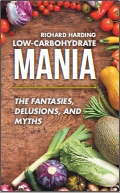
Low-carbohydrate Mania: The Fantasies, Delusions, and Myths

Center for Nutrition Studies

Center for Nutrition Studies

Contact

Wise Nutrition Coaching

Phone: +61 2 4930 7336

Mobile: +61 419 016 032

email: [email protected]