Diabetes and Obesity


  • USA Diabetes and Obesity by State

    The Human Development Index (HDI) was developed by the Pakistani economist Mahbub ul-Haq in 1990. It was incorporated into the the United Nations Development Programme. The index is based on the following criteria: Life Expectancy; Education; Income per capita.

    The map shows the quintiles of the HD Index for the United States.

    The two tables show for each US state the: Life Expectancy; Percentage of the population by ethnicy; Prevalence of diabetes according to ethnicity; OR Prevalence of obesity according to ethnicity.

    The ethnicity categories are: Asian; Black; Latino; Native American; White.

    Read more ⇒

  • Egg Consumption, B12, Lutein and Zeaxanthin

    B12 is a group of cobalt-containing vitamins. Hydroxocobalamin and cyanocobalamin are synthetic forms of vitamin B12. The two forms of vitamin B12 naturally occurring in foods are methylcobalamin and adenosylcobalamin. These forms are biologically equivalent.

    B12 is produced by a number of different species of bacteria which is found in the soil, on the surface of some plants and some red and green algae.

    Lack of vitamin B12 can have serious consequences as does high levels of homocysteine. Determining the status of vitamin B12 and homocysteine can be difficult and can be determined by measuring serum vitamin B12, homocysteine and methylmalonic acid (MMA).

    A number of products contain riboflavin, pyridoxine, folate, B12 and methionine way in excess of dietary requirements in an attempt to resolve B12 metabolism problems.

    Many magnesium supplements contain pyridoxine which is usually unnecessary and possibly detrimental.

    Vitamin B12 is not made by plants or animals but by microbes. In today’s world, the water supply is commonly chlorinated to kill bacteria. We don’t get much B12 in the water, we also do not get much cholera.

    Read more ⇒

  • Egg Consumption and Diabetes

    A number of popular authors and websites advocate eating eggs as a way of preventing type 2 diabetes. However, this is not substantiated by the evidence. To assess the impact of egg consumption on type 2 diabetes in China, a survey was performed among 2849 adults in Jiangsu Province, China. Jiangsu is a coastal Chinese province north of Shanghai.

    There are many more medical journal articles that associate egg consumption with a greater risk of type 2 diabetes.

    Read more ⇒

  • Bacon Causes Cancer – World Health Organization

    The World Health Organization (WHO) has classified processed meats including ham, bacon, salami and frankfurts as a Group 1 carcinogen which means that there’s strong evidence that processed meats cause cancer.

    Eating processed meat increases your risk of bowel and stomach cancer. Red meat, such as beef, lamb and pork, has been classified as a Group 2A carcinogen which means it probably causes cancer.

    WHO gives much stronger credibility to Random Clinic Trials (RCT) that other forms of evidence such as Epidemiolocal Studies.

    It is possible to have a very short-term RCT where the participants and researchers do not know the differences in the diet. This can be done by feeding the participants drinks containing a powder with different ingredients that that taste and feel the same for each meal. This is only practical for possibly 3 weeks.

    Any longer it can be a challenge. It can be difficult to learn what really constitutes a healthy, whole-food, plant-based diet. It really needs a supportive partner and learning how to shop, cook and manage changes to social interactions. It is much easier if the participants are living by themselves.

    Epidemiolocal Studies are just as valid.

    Read more ⇒

  • The Traditional Diet of Inuit (or Eskimo) Peoples

    The traditional diet of the Inuit people was first examined comprehensively by Vilhjalmur Stefansson in 1906. He visited the Copper Inuits during a number of expeditions. Their diet was virtually plant-free, dominated by seal and caribou meat, supplemented by large salmon-like fish and occasional whale meat. However, Stefansson found that cooking was the nightly norm.

    Read more ⇒

  • Comparison of Dairy Milks with Human Milk

    Milks are complex lipid emulsions in water containing protein, fat, lactose, vitamins and minerals, as well as enzymes, hormones and immunoglobulins which provide initial immunity functions.

    There is approximately 5,500 species of mammals which initially supply their young with milk. There are vast differences in milk composition among the mammal species. Of all the mammals, humans have the lowest protein content.

    Mammals have evolved over millions of years to provide nutrition for their infants in the first stage of life. There are significant difference between species depending upon factors such as rates of growth.

    Proteins in human milk provide sufficient of protein to sustain infants for the first six months without any additional food, as well as supplying the means of establishing suitable environment for the growth of healthy intestinal bacteria and providing the proteins involved in the immune system.

    Human milk is supplied to babies when the need for protein is at the greatest. Babies double in size during the first 6 months of our lives. The ideal food for a baby is mum’s milk where 5% – 6.5% is protein. This should offer reassurance that as long as we a consuming an adequate diet, we do not need a high protein diet.

    Read more ⇒

  • Methionine Dependent Cancers

    Homocysteine is a non-protein amino acid. It is synthesized in the body from methionine, which is a sulfur containing amino-acid.

    Methionine is much more prevalent in animal products than plant products. Rotten eggs smell the way they do because the sulfur produces a number of sulfur containing gases including hydrogen sulfide— rotten egg gas.

    A high level is of homocysteine is associated with an increased risk for chronic inflammation, cardiovascular disease, and Alzheimer’s disease.

    Many human cancer cell and primary tumors have a requirement for methionine, an essential amino acid.

    Methionine-free or methionine-deprived diet causes a regression of a variety of animal tumours.

    Read more ⇨

  • Is It Healthy? What are we Comparing

    When we ask the question Is it Healthy?, we need to consider is it healthy compared to what.

    Read more ⇨

  • The Cause of Type 2 Diabetes

    The cause of type 2 diabetes has been known since at least the 1920s.

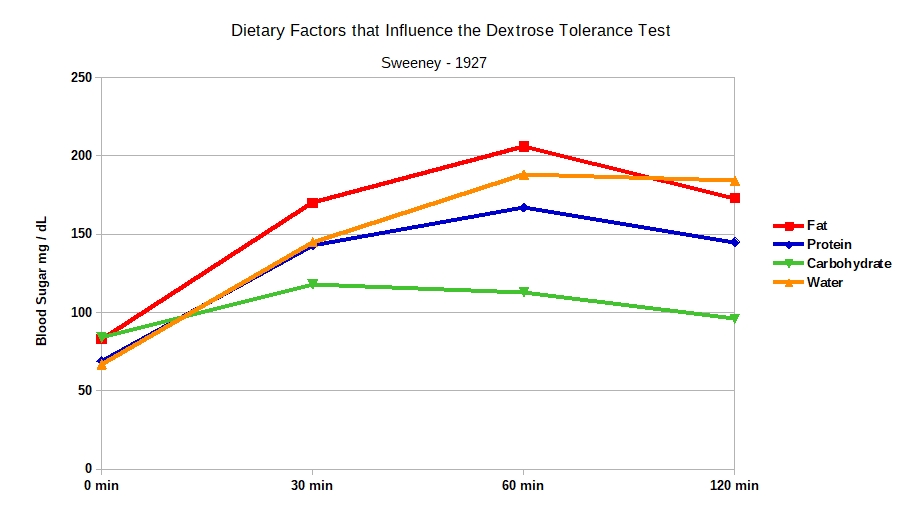
    In 1923, Dr. P.J. Cammidge wrote "that one of the commonest causes of a seeming progressive failure of carbohydrate tolerance was a conscious or unconscious increase in the fat of the diet."

    J.S. Sweeney wrote two papers in 1927 and 1928 that showed high-fat and high-protein diets increase insulin resistance.

    Sir Harold Himsworth (1905–93) was a renown medical doctor and researcher. He was appointed Professor of Medicine at the University of London in 1939. He is best known for his work on diabetes although he had many other interests including the effects of radiation, tropical medicine and epidemiology.

    Himsworth presented a paper in 1935,

    "Showing the different diets eaten by different races, nations and social classes throughout the world and a close correlation has been demonstrated between dietary preference and the incidence of diabetes mellitus. [...] A high proportion of carbohydrate and low proportion of fat were found in all cases to be associated with low diabetic incidence, whilst a low proportion of carbohydrate and a high proportion of fat were associated with a high incidence."

    Read more ⇨

  • The PURE Study Myths

    Dr James Muecke is the Australian of the Year in 2020 which was awarded for his work as an eye-surgeon and his work in preventing blindness.

    Muecke believes that we should be eating more eggs, cheese, meat and dark chocolate to minimise diabetes, its associated blindness (diabetic retinopathy) and diabetic neuropathy. Peripheral diabetic neuropathy is nerve damage of the limbs that is caused by diabetes. 50% of adults with type 2 diabetes have peripheral neuropathy. It can result in pain, numbness and an increase in sensitivity. Diabetes account for more than 80% of amputations.

    Muecke cites the PURE Study to justify his low-carbohydrate, high-fat, animal-based diet.

    The PURE Study is an observational study in 27 countries that examined 225,000 people. The study period is 20 years.

    Read more ⇨


Search


WHO's recommendations on saturated fat are out of date, expert team says.
However, the study has been funded by the dairy and beef industries.
Discover how industry-funded research is deceiving the public.


Low-carboydrate Diets - The Myths Why are Eggs NOT OK? Dairy and Wheat - What you did not know Carbohydrates DO NOT cause diabetes
Truth and Belief
Low-carbohydrate Mania: The Fantasies, Delusions, and Myths

Center for Nutrition Studies

Center for Nutrition Studies